A database page is a fixed-size unit of physical storage that holds multiple table or index records. In PostgreSQL, each page is 8 KB, so a page typically stores dozens of measurement rows rather than one complete record. section 9.7.2
For appended time-series data, rows fill the current page until it has no room; later rows continue in the next available page. Consequently, adjacent pages can contain increasingly later recorded_at values, creating physical correlation that BRIN indexes can exploit. section 9.7.2
Heart-rate measurements across pages
If page 1 contains earlier measurements, PostgreSQL places subsequent rows on page 2 after page 1 fills. Page 2 might therefore have recorded_at values from 1:41 through 3:21, with later pages holding later measurements. section 9.7.2
Figure 9.1 The measurement time (recorded_at column) is always greater in rows added last to the page.
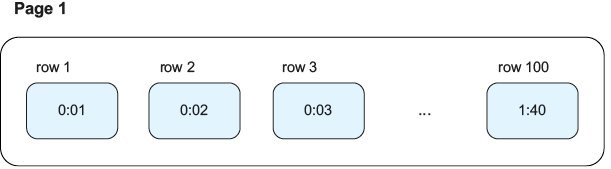
Visualizes how increasingly recent recorded_at values accumulate within a page. section 9.7.2

