A debate is a structured exchange that keeps opposing viewpoints focused on ideas rather than personal conflict. In facilitation, framing disagreement as dialogue or debate helps preserve openness, neutrality, and collaborative inquiry. section 8.3.1
Use debate as a facilitation move when disagreement begins to harden:
- Distinguish task-based conflict from relationship conflict by asking whether emotion is helping or hindering progress. section 8.5
- Replace right-versus-wrong language with questions about competing ideas and perspectives. section 8.3.1
- Investigate your own strong opinions so personal bias does not compromise facilitation neutrality. section 8.5
- Ask whether anyone sees an issue differently, making less-visible opinions conscious in the group. section 8.5
A Kubernetes disagreement
A facilitator who believes Kubernetes is rarely useful may label opposing views as wrong, collect confirming evidence, interrupt, or lobby against the technology. Reframing the exchange as a debate keeps attention on the idea and helps the facilitator remain open to other perspectives. section 8.3.1
Figure 8.4 An example of how our bias blind spot can lead to shadows and demons getting entangled with the group in a software design EventStorming session at BigScreen. Not being aware of how your own bias interplays with that of the group might lower your effectiveness as a facilitator.
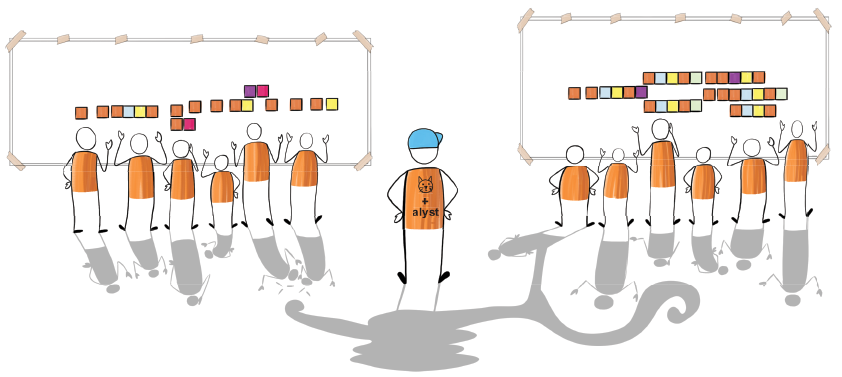
Use the bias-blind-spot illustration to examine how a facilitator’s judgments can become entangled with group conflict during a software design EventStorming session. section 8.3.1
