Decimal is a base-10 positional number system that represents every value with the digits 0 through 9. It provides the everyday foundation for understanding IPv4 addressing and comparing number systems used in networking. section 7.2.1 section 7.0
Understand decimal notation through its digit positions:
- Single digits represent values from 0 through 9. section 7.2.1
- Each position to the left is worth ten times the position immediately to its right: ones, tens, hundreds, and thousands. section 7.2.1
- The number 1,009 contains 1 in the thousands position and 9 in the ones position, so the left digit contributes more. section 7.2.1
Networking notation
Prefixes can distinguish number systems: 0d10 means decimal ten, while 0x10 means hexadecimal sixteen. Decimal is used alongside binary for IPv4 and alongside hexadecimal when comparing network representations. section 6.2.2 section 7.2
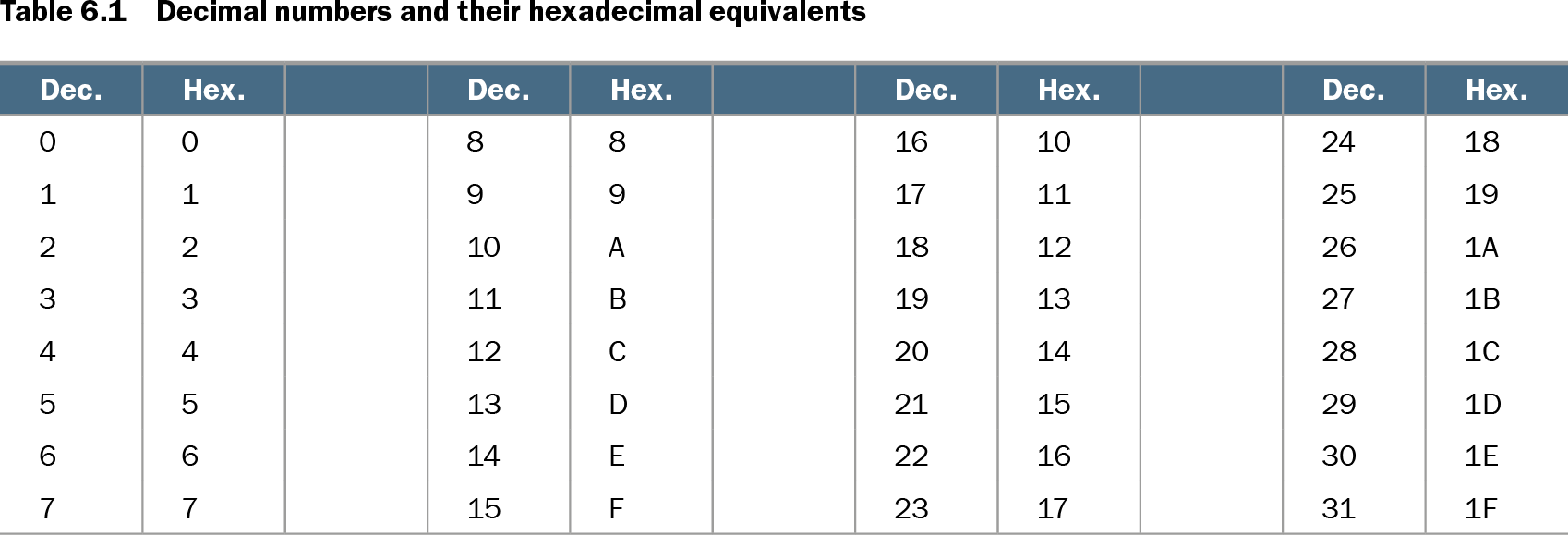
Table 6.1 Decimal numbers and their hexadecimal equivalents (view table figure)
| Dec. |
Hex. |
Dec. |
Hex. |
Dec. |
Hex. |
Dec. |
Hex. |
|||
|---|---|---|---|---|---|---|---|---|---|---|
| 0 |
0 |
8 |
8 |
16 |
10 |
24 |
18 |
|||
| 1 |
1 |
9 |
9 |
17 |
11 |
25 |
19 |
|||
| 2 |
2 |
10 |
A |
18 |
12 |
26 |
1A |
|||
| 3 |
3 |
11 |
B |
19 |
13 |
27 |
1B |
|||
| 4 |
4 |
12 |
C |
20 |
14 |
28 |
1C |
|||
| 5 |
5 |
13 |
D |
21 |
15 |
29 |
1D |
|||
| 6 |
6 |
14 |
E |
22 |
16 |
30 |
1E |
|||
| 7 |
7 |
15 |
F |
23 |
17 |
31 |
1F |
Compare small decimal values with their hexadecimal equivalents, including the point where hexadecimal begins using letters. section 6.2.2