Deliberative reasoning makes a model consider intermediate steps, evidence, and alternatives before answering. Chain-of-Thought prompting externalizes this process as a live reasoning trace rather than a direct intuitive leap. section 3.6.1
Use deliberation as an engineering control rather than an automatic verbosity setting:
- Match reasoning effort to task complexity instead of applying one prompting pattern universally. section 3.6.1
- Ground decisions with tests, compilers, and MCP servers, then audit the visible reasoning trace. section 3.6.1
- Treat explicit Chain-of-Thought as a mental model when working with smaller, cheaper, non-reasoning models; frontier models increasingly provide built-in deliberation. section 3.6.1
Refactoring a payment function
A direct prompt says, “Refactor the process_payment function to use the new StripeV3 client.” A deliberative response first analyzes dependencies, identifies old-client calls, and searches the supplied context for StripeV3 usage before acting. section 3.6.1
Figure 3.13 Cline sharing plan for achieving the goal, waiting for human in the loop to approve.
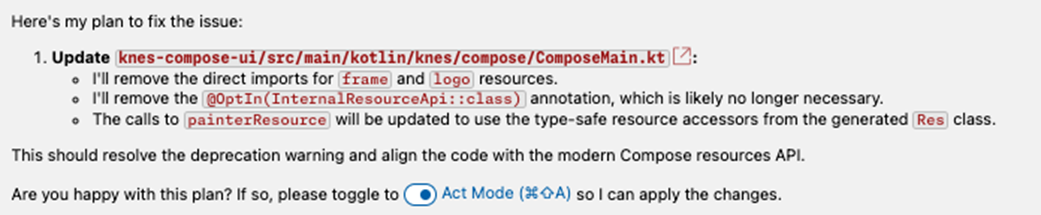
Use the execution-plan view to inspect how deliberation can become an explicit plan and pause for human approval. section 3.6.1
