A developer-in-the-loop model keeps a human involved when an AI agent changes software: the agent proposes or implements changes, while a developer approves them before final integration. section 8.6
The arrangement makes AI agents collaborators rather than simple code-completion tools. They can initiate changes, track modifications, and use external tools, while human oversight remains especially important for production systems. section 8.6
The pattern appears across software workflows:
- IDE-based agents support real-time collaboration and increasingly autonomous, goal-driven work. section 8.6
- DevOps and continuous integration and continuous delivery workflows use agents to monitor systems, suggest fixes, roll back deployments, and triage performance issues. section 8.6
- Low-code and no-code workflows let non-developers build applications or automate tasks with limited technical input. section 8.6
Figure 8.3 Workflow of an AI coding agent embedded in an IDE, from task planning to deployment
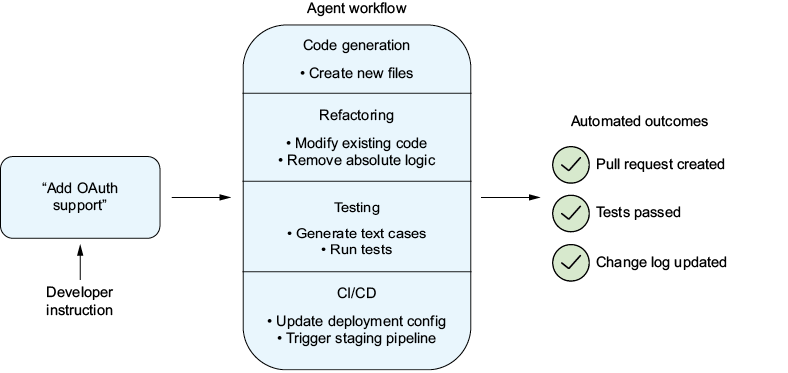
Follow the workflow from task planning through deployment in an AI coding agent embedded in an integrated development environment. section 8.6
