A device ID is an identifier associated with a computing device that helps recognize activity across digital interactions. In marketing, it can connect app, web, or connected-TV events when other identifiers, such as cookies, are unavailable. section 8.4 section 6.2
Use device IDs with these practical distinctions:
- Treat them as one identity-resolution signal alongside cookies, IP address analysis, device fingerprinting, progressive profiling, and single sign-on. section 6.2
- Expect platform and privacy limits: device identifiers may be available on Android but are often blocked on iOS, while clean rooms restrict sharing to hashed or anonymized data. section 6.2 section 8.4
- Use consistent, protected identifiers in secure data pipelines; hashing, encryption, and deterministic or probabilistic matching can add technical and integration overhead. section 8.4
A shoe retailer measures a multichannel campaign
The retailer matches website browsing, mobile-app product views and cart activity, and connected-TV ad exposure in a clean room. It hashes email addresses, uses a device ID or hashed account identifier for app events, and anonymizes or encrypts supplied identifiers before analysis. section 8.4
Figure 6.10 Data enrichment for enhanced match rates
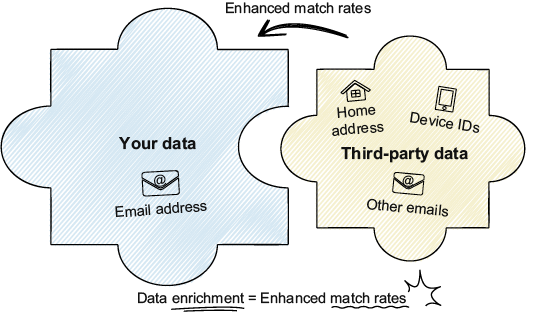
View how a third-party provider can append device identifiers and other contact information to improve advertising match rates. section 6.3.3
