Diagrams as code generates visual diagrams from textual descriptions written in a diagramming language. Teams can store those descriptions in a repository, where people critique, modify, and comment on them asynchronously. section 11.2.1
Use the technique to make diagrams easier to:
- Communicate architecture at different abstraction levels, such as with a C4 diagram. section 11.2.1
- Connect diagrams to ticketing systems so diagram work can be discussed before formal planning. section 11.2.1
- Keep representations open to feedback while recognizing that diagrams can still invite misinterpretation. section 11.2.1
A repository-based architecture discussion
Describe a proposed architecture in Mermaid JS, PlantUML, or Structurizr, commit the textual diagram to a repository, and invite teammates to comment on the representation and its assumptions. section 11.2.1
Figure 11.6 C4 Container diagram explaining how the architecture might look in the new design
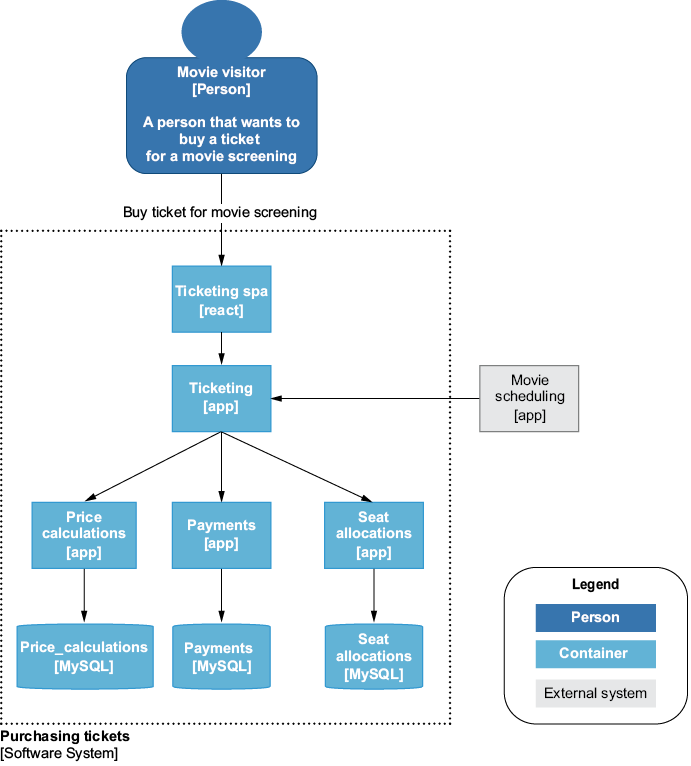
Use the C4 container diagram to inspect how a proposed architecture communicates its new design. section 11.2.1
