liveBook · Manning

Distributional hypothesis

As explained in The Art of AI Product Development

Distributional similarity is the principle that words or texts occurring in similar contexts tend to have related meanings.

Distributional similarity holds that words appearing in similar contexts tend to have related meanings. Embeddings turn this principle into vectors: words sharing contexts receive nearby representations, supporting semantic search. section 7.2.2

Context recovers meaning

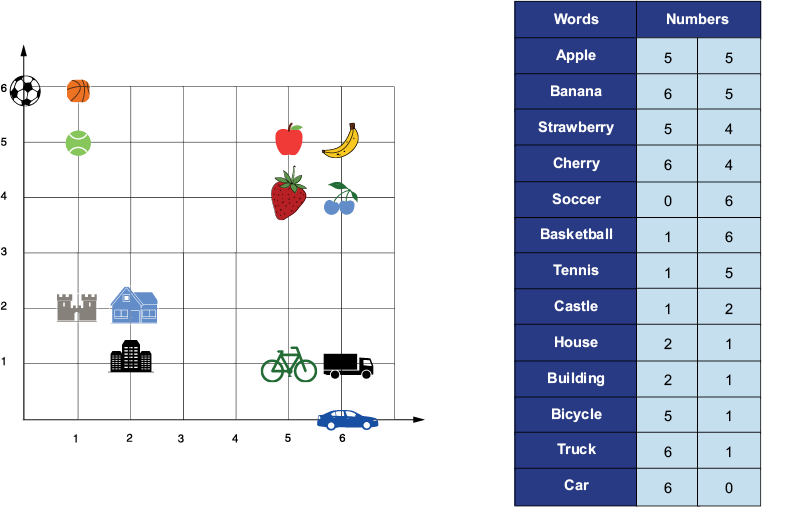
In “The customer finally signed the cotnratc,” the surrounding words suggest “contract.” Similarly, apple and banana appear in contexts such as fruit, juice, and healthy, so their embeddings are closer than car’s. section 7.2.2 section 7.2.2

Figure 7.3 Semantically similar words are closer to each other in embedding space.
A screenshot of a computer game

AI-generated content may be incorrect.

Use the embedding-space diagram to see how semantically similar words are positioned near one another. section 7.2.2


How The Art of AI Product Development covers it

How deep it goes
Explains the principle through contextual interpretation and word-vector examples, then connects it to semantic search.
Examples
Uses a misspelled contract and the apple–banana–car comparison to demonstrate contextual recovery and vector proximity.
What you can do after
Apply it via embeddings to understand why semantically related words or documents can be retrieved together.
How it connects
Connects embeddings, semantic search, deep learning, and embedding databases through shared contextual meaning.

Also explained in

Compare how 2 books explain distributional hypothesis →

Related concepts

This explainer was generated by Manning's knowledge graph from the text of The Art of AI Product Development. The section links point to the parts of the book it draws on.