Domain-driven design structures a platform around the real product domains it serves, allowing independent teams to deliver capabilities while sustaining a coherent user experience as the platform evolves. section 1.3 section 1.3.2
Use domain boundaries to organize ownership, backlogs, and priorities—not to reproduce traditional IT functions. A boundary is sound when its domain is pleasant to use, teams can operate independently, and routine engineer-to-engineer coordination is unnecessary. section 1.3.2
Apply the approach by:
- Identifying internal product domains and assigning each to a domain team. section 1.3 section 1.3.2
- Giving each team a backlog and priorities while coordinating dependencies through subdomain product owners and domain-level architects. section 1.3.2
- Treating frequent cross-team requests or meetings as a smell that domain boundaries or responsibilities need correction. section 1.3.2
Figure 1.3 Platform engineering depends on the disciplined application of a product delivery model. Product management drives decisions about the product’s capabilities, features, and experiences. Effective platform engineering principles enable us to deliver these more successfully. Identifying and architecting around the internal product domains of our platform is how we successfully sustain the user experience as the product evolves and scales.
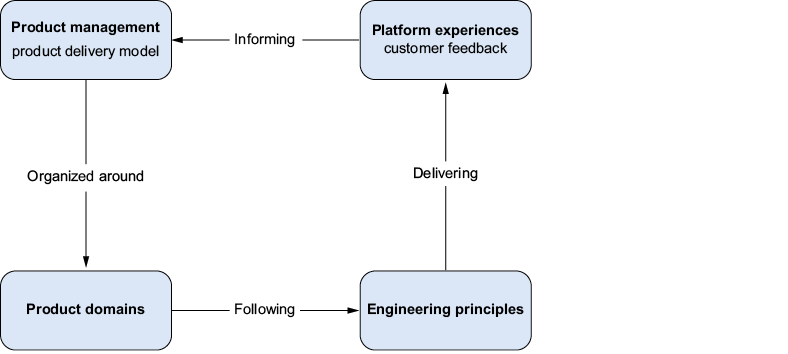
Use the product delivery model to relate product management, platform engineering principles, internal domains, team growth, and user feedback. section 1.3






