The Dreyfus Skill Model describes progression from novice rule-following toward expert and master performance guided by intuition. It explains why autonomy becomes more valuable as skill develops. section 4.1
The model highlights a practical distinction:
- Novices often improve through explicit checklists, rules, and repeatable patterns. section 4.1
- Experts and masters make rapid decisions through subtle cue recognition and intuition; imposing rigid checklists can reduce their performance. section 4.1
Emergency response and hockey
Novice pilots performed better with an emergency checklist, while expert pilots performed better without restrictive limits. Similarly, novice hockey players can follow “Scan, Ask, Act,” whereas master players react instinctively to tiny shifts in opponents’ movement. section 4.1
Figure 4.1 The original table from Dreyfus and Dreyfus’s paper [2]
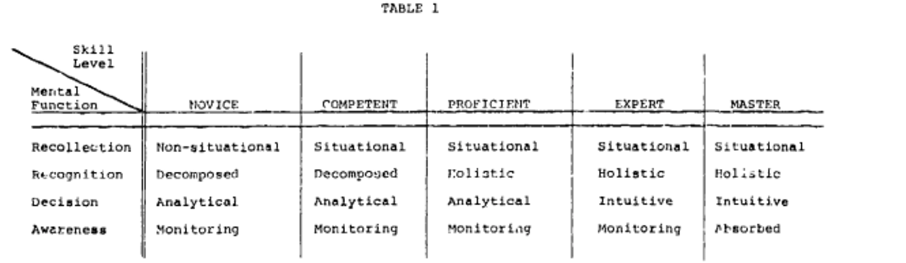
Use the original model table to compare how decision-making changes across skill levels. section 4.1

