liveBook · Manning

Dynamic reteaming

As explained in Architecture Modernization: Socio-technical alignment of software, strategy, and structure

Dynamic reteaming is the deliberate evolution of team membership and team structures in response to changing organizational needs, knowledge, priorities, and constraints.

Dynamic reteaming deliberately evolves team membership and structures as organizational needs, priorities, knowledge, and constraints change. It treats teams as fluid parts of an evolving topology rather than permanent units, helping organizations respond to growth, new work, learning, and unexpected events. section 11.6

Dynamic reteaming identifies five reasons and five recurring patterns:

  • Reasons include growth or attrition, new work or priorities, knowledge sharing, stagnation and learning, and surprise reasons. section 11.6
  • Patterns include grow and split, merging, isolation, switching, and one by one. section 11.6
  • Apply the principles and patterns at group level as well as team level, while considering the product, domain, organization, and people involved. section 11.6

Switching across teams

A switching pattern can move knowledge through a domain by having a developer from each team switch to another team every month. section 11.4.3
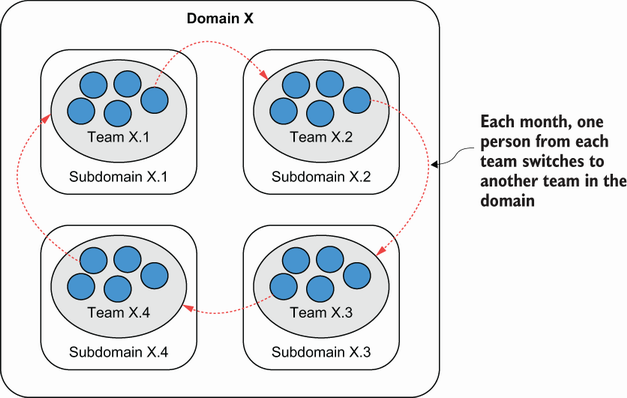
Figure 11.11 Every month a developer from each team switched to another team in the domain.

Use the figure to visualize switching as a recurring movement of developers between teams. section 11.4.3

How Architecture Modernization: Socio-technical alignment of software, strategy, and structure covers it

How deep it goes
Defines five reteaming reasons and five patterns, but does not elaborate procedural steps for applying each pattern.
Examples
Uses a switching example in which a developer from each team moves to another team every month.
What you can do after
Evaluate team fluidity by identifying reteaming reasons and selecting among grow-and-split, merging, isolation, switching, and one-by-one patterns.
How it connects
Links team fluidity with Team Topologies, team grouping, topology evolution, knowledge sharing, and organizational change.

Related concepts

This explainer was generated by Manning's knowledge graph from the text of Architecture Modernization: Socio-technical alignment of software, strategy, and structure. The section links point to the parts of the book it draws on.