An edge location is a distributed computing site positioned near users, often within or near an ISP. It sits between users and centralized cloud servers, reducing latency by processing requests closer to where they originate. CDN providers such as Fastly, Cloudflare, and Akamai operate many of these locations. section 9.2.3
A blog with dynamic comments
A static blog can serve HTML from a nearby edge location instead of an origin server in Virginia. If comments are also processed there, edge code can retrieve, order, nest, and filter comments near the reader rather than sending every request to a centralized database. The same location can deliver both cached posts and dynamic responses, reducing perceived delay. section 9.2.3
Figure 9.4 Request flow with edge compute. Incoming requests first hit the edge node, where user-defined Wasm code can perform logic before routing to the centralized cloud backend.
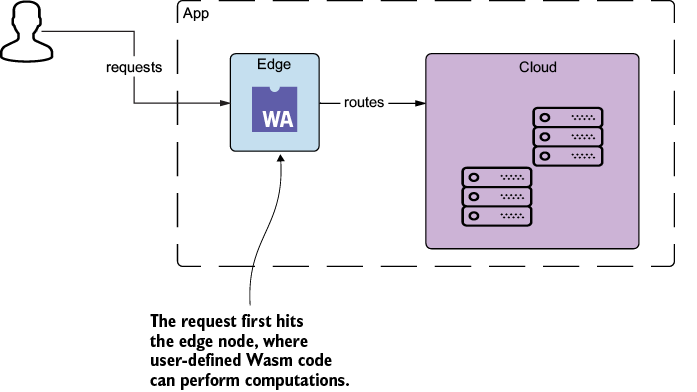
Trace how a request reaches an edge node, where user-defined WebAssembly can apply logic before routing to a centralized cloud backend. section 9.2.3
