The edit-test-analyze loop is a developer’s implementation cycle: change code, run tests, and examine the results. It sits inside the broader change-deploy-analyze loop, which carries changes through deployment and feedback. section 5.1
Keep each iteration fast and straightforward by supporting:
- Code that is easy to understand and change, including changes to the technology stack. section 5.1.1
- Tests that are easy to write, run quickly, and execute locally. section 5.1.1
- Limited dependence on other teams; integrate work into the trunk at appropriate intervals for timely feedback. section 5.1.1
Orders business-rule change
A developer changes an Orders business rule and runs its tests in IntelliJ IDEA; they complete within two seconds. Separating web and persistence build projects can also prevent unrelated tests from rerunning when either area changes. section 5.4.1 section 6.3.4
Figure 5.1 The iterative workflow for designing and developing a flow item. It consists of two loops, one nested inside the other. The outer change-deploy-analyze deploys changes into production and analyzes feedback. The change step of the outer loop consists of making a design decisions and the inner edit-test-analyze loop, which is the developer’s workflow for implementing a change.
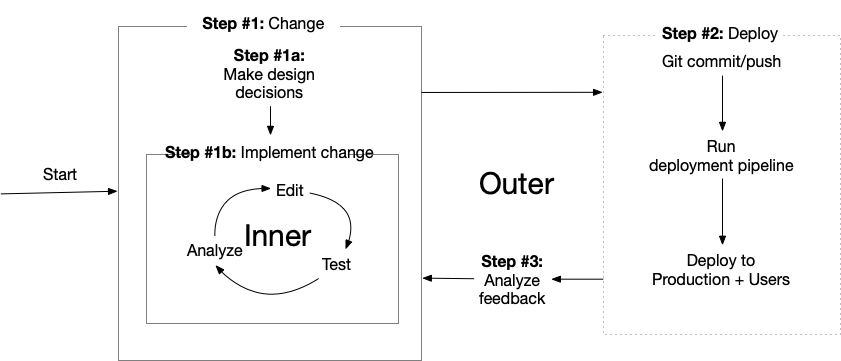
Use the workflow diagram to distinguish this implementation cycle from the surrounding deployment-and-feedback loop. section 5.1
