An effect-effort matrix prioritizes improvement opportunities by balancing the problem’s expected effect against the time, resources, and complexity required to fix it. Start with high-effect, low-effort changes; treat frequency as an additional factor when adjusting priorities. section 3.4.2
Figure 3.17 An effect-effort matrix visualizes the relationship between the effort required and the potential effect of a proposed change.
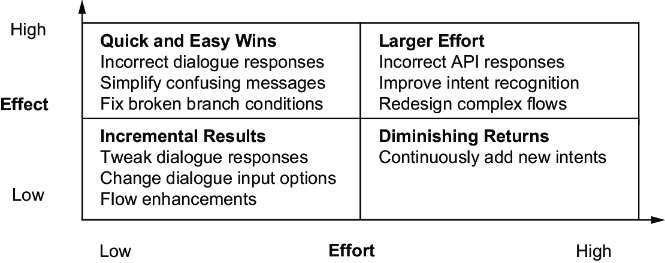
Use the matrix to compare the potential effect of a proposed change with the effort required to implement it. section 3.4.2
Interpret the categories as practical prioritization guidance:
- High effect and low effort: fix first because these changes offer the greatest potential effect with the quickest implementation. section 3.4.2
- Low effect and high effort: defer when better candidates exist; medium-effect changes may provide incremental results. section 3.4.2
Chatbot improvement
A broken dialogue tree can create dead ends and abrupt conversation drops while remaining relatively easy to correct, making it a stronger candidate than a complex flow requiring complete redesign. An incomplete response caused by API variation may have medium effect and high effort.
