An ElementInjector is associated with each rendered DOM node, component instance, or directive instance. It is empty by default and receives providers declared for that component or directive. section 3.1.3
Dependency lookup follows a hierarchy. Angular checks the relevant ElementInjector and moves upward; older applications then relied on ModuleInjector, while fully standalone applications can reach route or main.ts providers instead. section 3.1.3
Repeated component instances
When an *ngFor renders five EmployeeListComponent instances, Angular creates five ElementInjectors and repeats dependency resolution for EmployeeService for each instance. Directives receive equivalent per-instance treatment. section 3.1.3
Figure 3.2 Diagram illustrating the hierarchy of injectors and dependencies
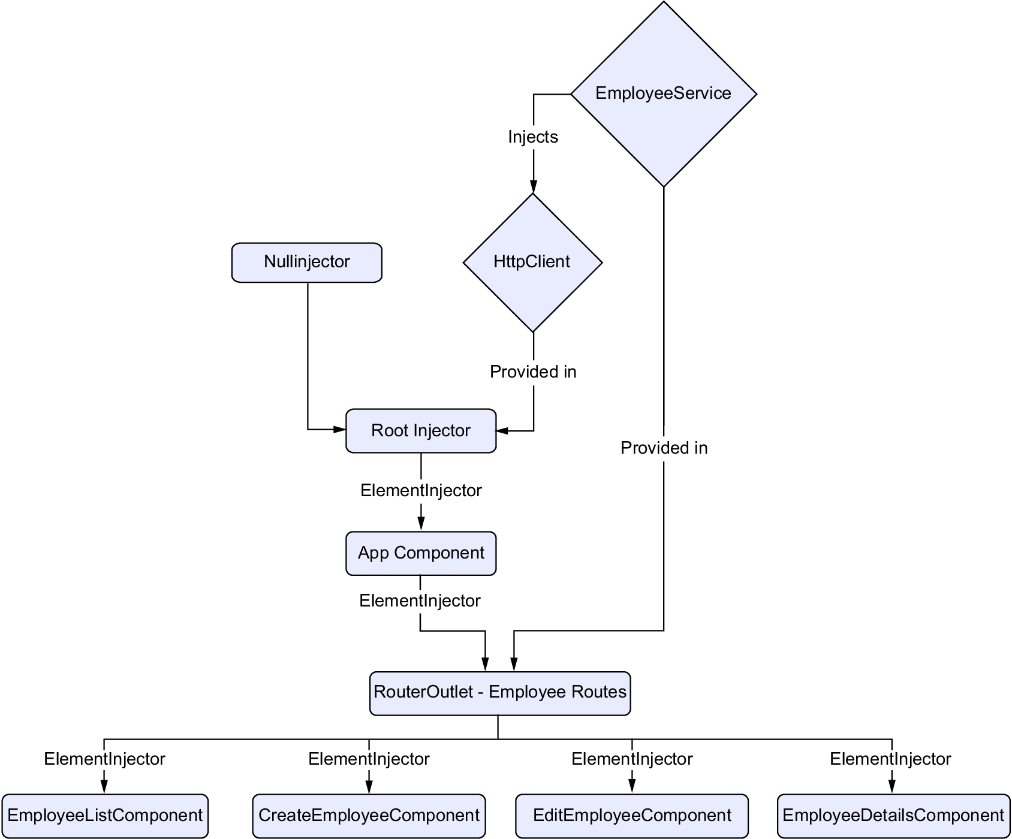
Use the injector hierarchy diagram to trace how dependency resolution moves between element-level and broader provider scopes. section 3.1.3