ELT is a data integration pattern that extracts data from source systems without transforming it, loads the raw data into a designated Snowflake database, and transforms it inside Snowflake. It supports pipelines that move operational data toward downstream consumption while preserving the source data before transformation. section 11.1.2 section 11.3
A typical ELT flow separates responsibilities across pipeline stages:
- Extract data from operational databases or files without applying transformations at the source. section 11.1.2
- Load the extracted data into a Snowflake extraction layer or landing zone. section 11.1.2
- Format, clean, and apply business transformations inside Snowflake, using its compute resources. section 11.1.2
- Organize intermediate outputs into layers such as extraction, staging, data warehouse, and presentation. section 11.3
ELT becomes attractive as data volumes increase because transformations run after ingestion and can use Snowflake compute. Compared with ETL, it keeps source data available, while transformation logic is separated from extraction tools or custom applications. The pipeline still requires deliberate design around targets, layers, governance, and security. section 11.0 section 11.1.2
Bakery operations pipeline
A bakery pipeline can ingest tables from its operational information system, such as business partners and baked goods, into Snowflake before formatting, cleaning, and transforming them for downstream users. section 11.0
Figure 11.2 ELT pattern where data is first extracted without transformations, loaded into Snowflake, and then transformed using Snowflake compute resources
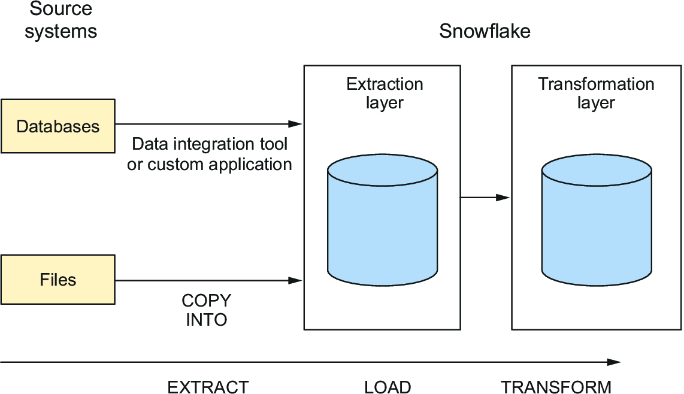
Use the ELT pattern figure to trace extraction without transformations, loading into Snowflake, and subsequent transformation with Snowflake compute resources. section 11.1.2

