An emergency is an unexpected situation that threatens project timelines, system stability, safety, objectives, or team morale. In software work, examples include a systems failure, data breach, failed production deployment, or organizational disruption. Lead developers reduce confusion by establishing communication, coordinating decisions, and guiding the team toward recovery. section 10.3 section 10.5.3
Handle an emergency with practical leadership habits:
- Assess the severity and scope first, including effects on systems, users, and stakeholders. section 10.3
- Activate a response plan with defined communication channels, escalation procedures, decision-making hierarchy, roles, and responsibilities. section 10.3
- Stay positive and invite input; reassurance and psychological safety help people share expertise and remain resilient. section 10.3.1
- Delegate according to workload, dependencies, and resources so investigation, stakeholder communication, maintenance notices, and recovery work proceed together. section 10.3.2
- Protect personal capacity with breaks and self-care, because exhaustion can reduce patience, focus, and response quality. section 10.3.1
A critical data failure
After a database administrator deleted data needed for user accounts and several backups failed, the response divided responsibilities: one person gathered backups, another added a maintenance alert to the dashboard, and the lead coordinated developers, database administrators, and the project manager. The team could not recover everything, but collaboration helped identify the cause and establish processes to prevent recurrence. section 10.3.2
Figure 10.6 Handling emergencies
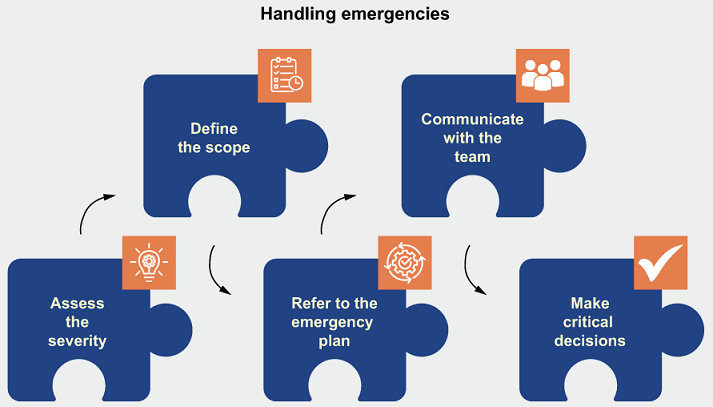
Use the five-phase emergency-handling overview to navigate assessment, response planning, and coordinated leadership actions. section 10.3
