To print a dark line, engrave the line itself into a metal plate. This is the opposite of a woodblock: material is removed where ink should appear. The plate is inked all over, wiped clean on its surface, and pressed onto damp paper; ink left in the cut lines transfers under pressure. section 8.2
Engraving uses tools associated with decorative metalwork. A copper plate can be cut with a hard metal burin and used to make hundreds of prints, although repeated pressure eventually produces faded impressions. The work is skilled and difficult, so later intaglio methods sought either finer results or less demanding technique. section 8.2
The physical sequence is simple, even when the cutting is not:
- Cut lines into a metal plate where ink is wanted. section 8.2
- Rub viscous ink across the plate and carefully wipe away excess. section 8.2
- Press the plate onto dampened paper so ink in the lines transfers. section 8.2
Figure 8.8 Engraving, Ars moriendi by Master ES, circra 1450
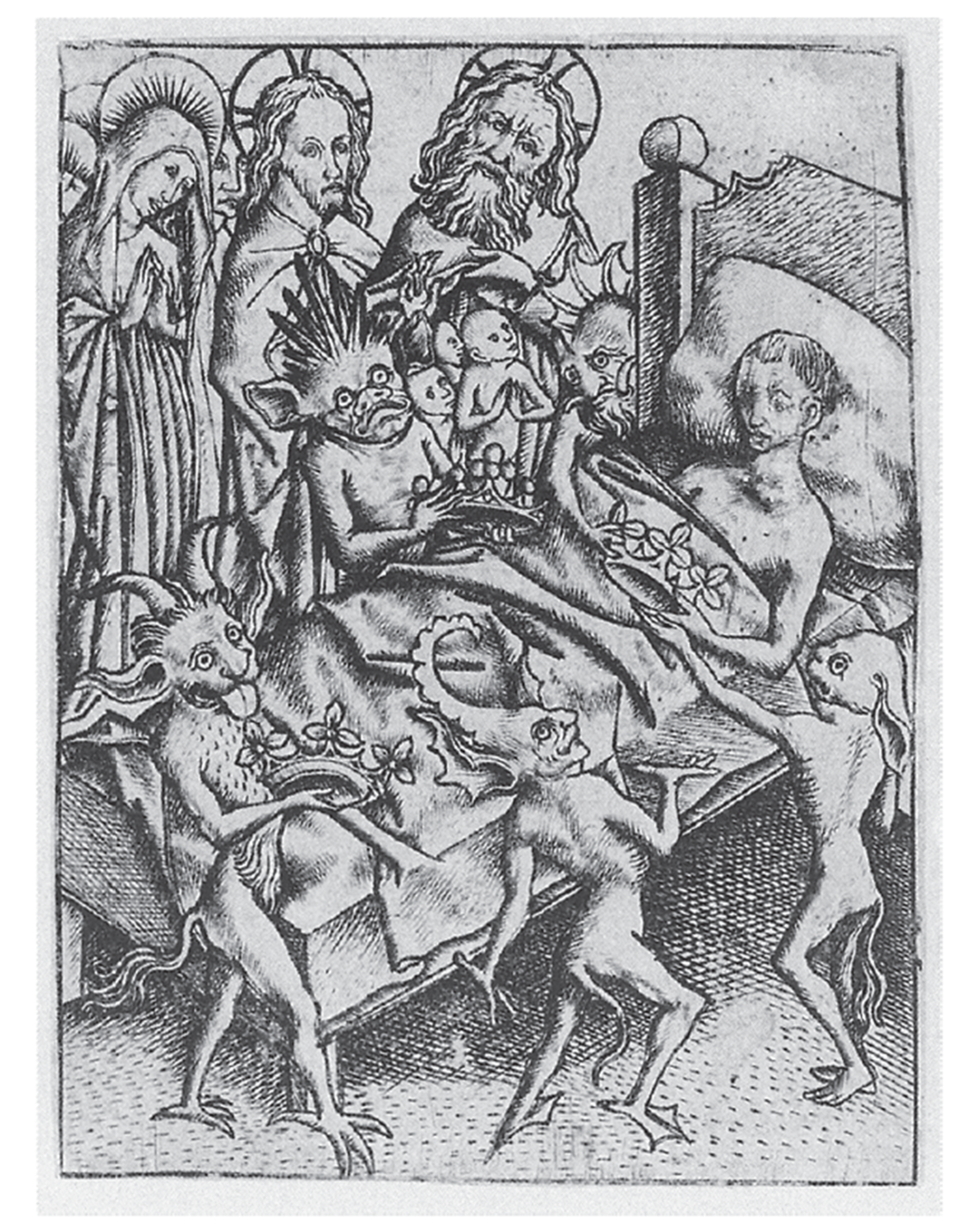
Compare this early, simple, coarse engraving with the finer later example to see how much control the technique can demand. section 8.2
Figure 8.9 Fine engraving. Melacolia I, Albrecht Dürer, 1514.
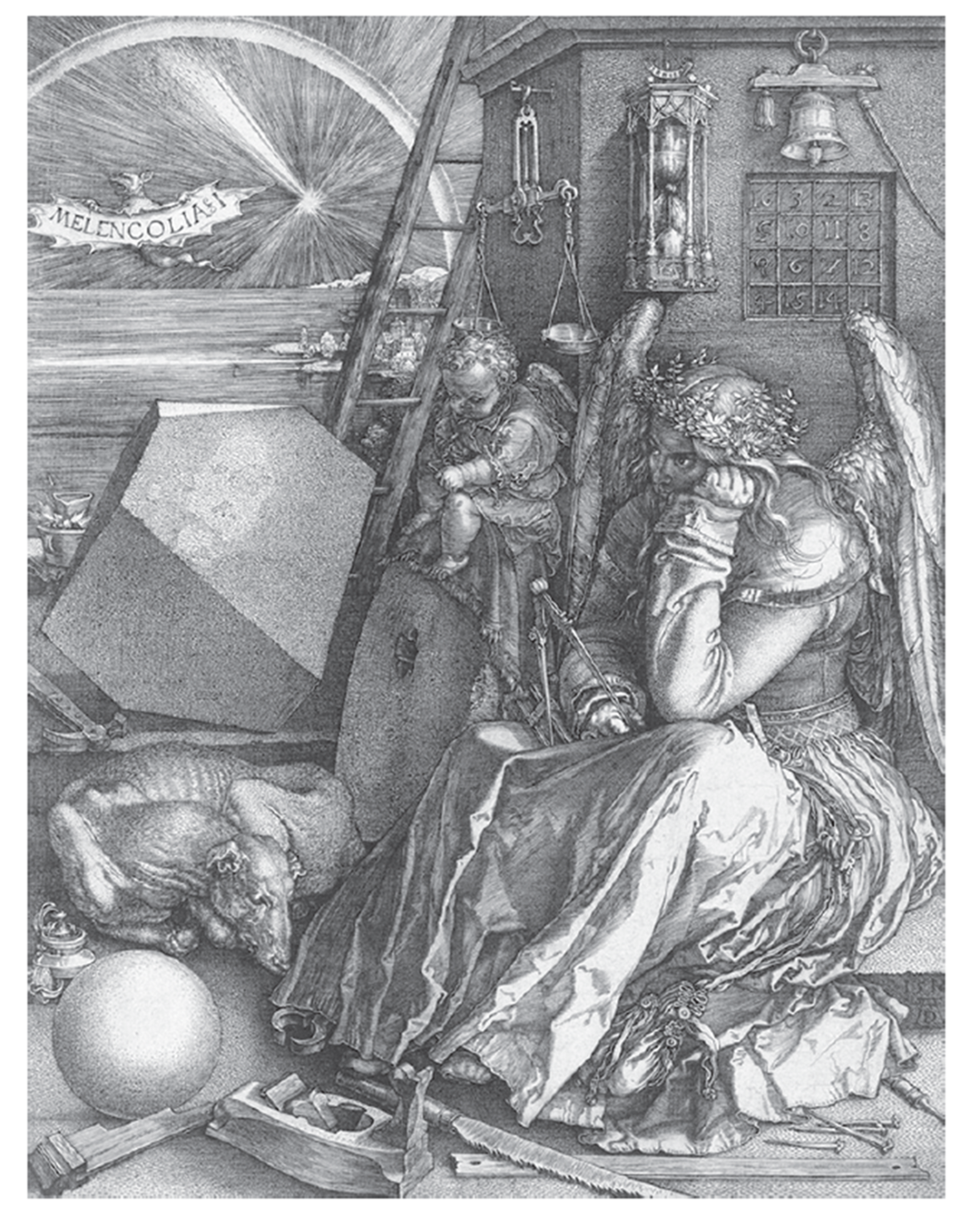
A fine engraving by Albrecht Dürer shows a more accomplished result from engraved lines. section 8.2
