What kind of place helps ideas emerge without interrupting the concentration needed to make them real? Environmental design shapes spaces around that tension: open areas can encourage unexpected encounters, while enclosed areas can protect deep work. section 7.5.1
A workable creative environment can combine:
- Long hallways or shared routes for chance encounters. section 7.5.1
- Closed subenvironments or team compartments for uninterrupted implementation. section 7.5.1
- Flexible arrangements that support both interdisciplinary discussion and solitary concentration. section 7.5.1
A programmer’s workspace
Imagine a programming office where people meet naturally while walking to shared facilities, but can retreat behind a door when wrestling with implementation details. The goal is incentive without disruption—and enough visual or cultural interest to appeal to the imagination. section 7.5.1
Figure 7.6 The Salk Institute courtyard showcasing a mirrored structure containing strategically placed laboratories, utilities, office spaces overlooking the Pacific Ocean, and study areas. Photo courtesy of Adam Bignell, Unsplash.
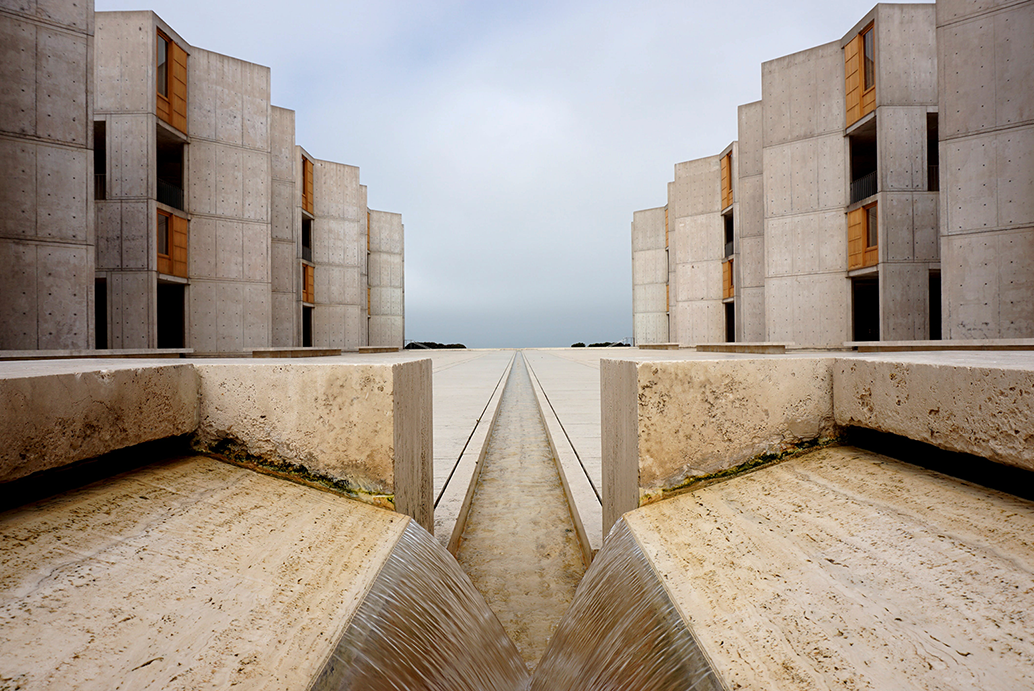
Use the Salk Institute courtyard as a spatial prompt: notice how mirrored structures, laboratories, offices, utilities, and study areas are strategically arranged around shared space. section 7.5.1
