A request like “add a favorite button” can tempt a team to jump straight into code. This process turns the request into a defensible plan by asking why, sketching a direction, weighing alternatives, and recording the decision. section 1.5.1 section 1.10
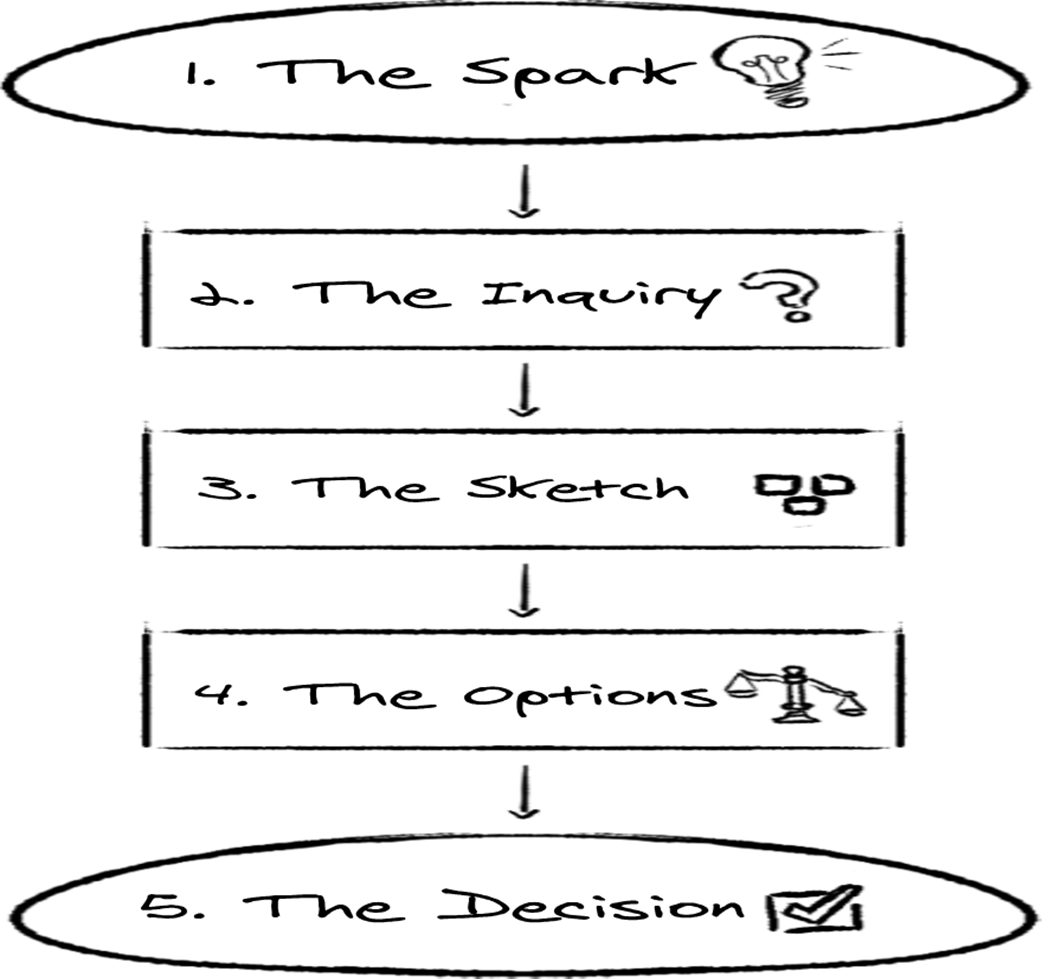
Move through five steps:
- Spark: Notice the request or problem. section 2.1
- Inquiry: Find the why, desired qualities, and real-world limits. section 2.1
- Sketch: Draw the high-level idea before writing code. section 2.1
- Options: Compare realistic paths and their tradeoffs. section 2.1
- Decision: Document the choice and the reasoning behind it. section 1.10
A messy OrderProcessor
A bug fix reveals that one method handles validation, payments, inventory, and email. Inquiry identifies poor maintainability and testability; a sketch separates responsibilities; options weigh a full refactor against a smaller change. The process makes the reasoning explicit before choosing a path. section 3.5.2
Figure 1.4 This five-step Architectural Thinking Process shows the architect's journey from a vague request to a defensible plan. It starts with the initial spark (#1), moves to inquiry to find the "Why" (#2), leads to a simple sketch (#3), explores tradeoffs between options (#4), and ends with a documented, defensible decision (#5).
See the five-step path from a vague request to a documented decision. section 1.5.1
