Etching makes a metal plate behave like a drawing surface. First cover the plate with an acid-resistant layer. Scratch that layer away where the printed image should appear, then wash the plate with acid. The exposed metal becomes rough enough to hold ink; printing follows the usual intaglio process. section 8.2
The useful trade-off is between direct drawing and durable metalwork. An engraver must cut metal directly, while an etcher draws through a protective coating and lets acid make the recesses. That made intaglio printing more available to artists without difficult engraving skills. section 8.2
Stopping out adds control when one flat exposure is not enough:
- Dip the plate briefly in acid to roughen the currently exposed areas. section 8.2
- Protect selected areas again with acid-resistant material. section 8.2
- Dip again so remaining exposed areas receive further action, improving control of gray tones. section 8.2
Figure 8.12 Etching. Christ Healing the Sick, or The Hundred Guilder Print, by Rembrandt van Rijn, c. 1647–1649.
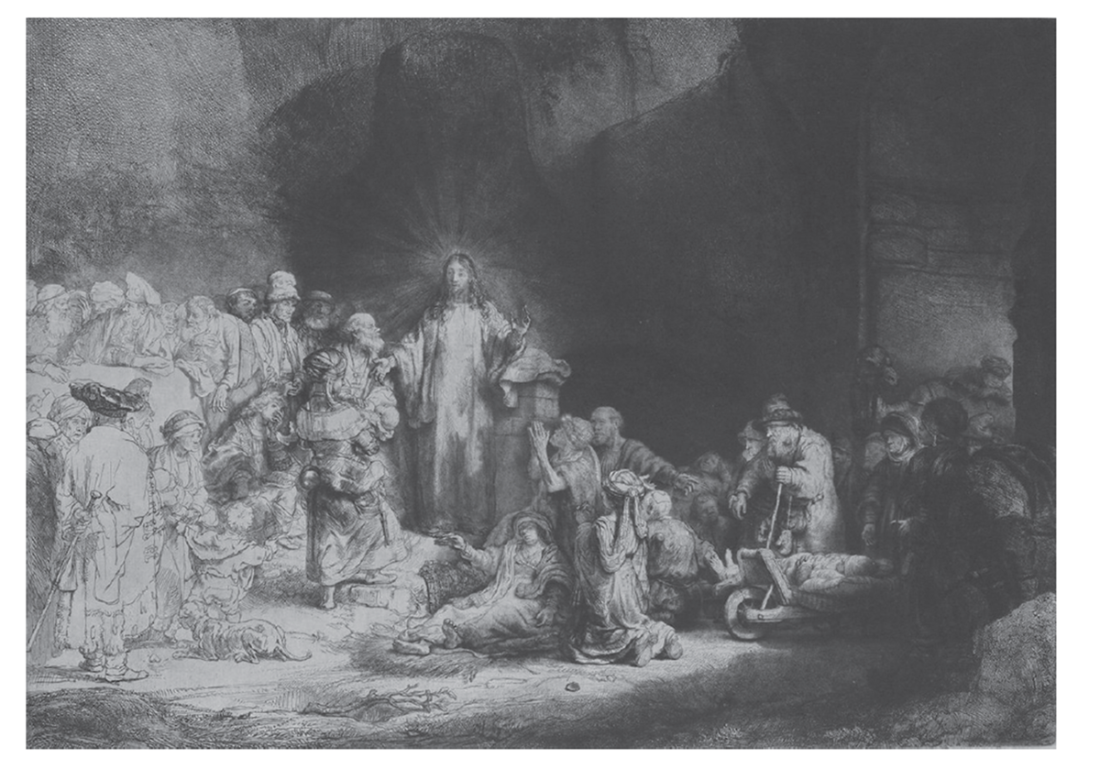
Rembrandt’s The Hundred Guilder Print provides a finished example of an etched image and its tonal possibilities. section 8.2
