liveBook · Manning

Evolution axis

As explained in Architecture Modernization: Socio-technical alignment of software, strategy, and structure

An evolution axis is the horizontal dimension of a Wardley map that represents how standardized or mature a component is.

The evolution axis is the horizontal dimension of a Wardley map. It positions components according to how standardized or mature they are, helping a map show their evolutionary state. section 5.2

Use the axis while creating a Wardley map:

  • Define the map’s purpose and scope before positioning components. section 5.2
  • Identify users, their needs, and the value chains built from components. section 5.2
  • Map each component along the evolution axis to complete the Wardley map. section 5.2

Online food delivery

A macro-level map for an online food delivery marketplace identifies customers, restaurants, and riders before placing its components along the evolution axis. section 5.2
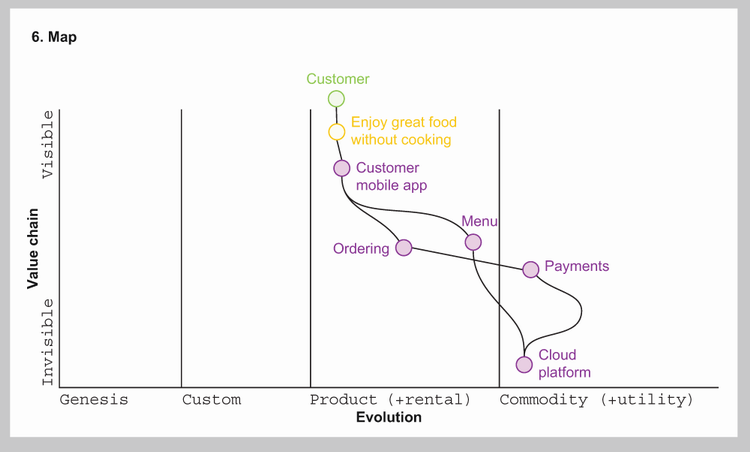
Figure 5.7 Step 6 of the Wardley Mapping Canvas, a Wardley Map

Inspect the completed Wardley Mapping Canvas output to see how components appear on the evolution axis. section 5.2

How Architecture Modernization: Socio-technical alignment of software, strategy, and structure covers it

How deep it goes
Defines component placement within a six-step mapping process but does not detail maturity stages or movement along the axis.
Examples
Uses an online food delivery marketplace and a Wardley Mapping Canvas to demonstrate map construction.
What you can do after
Apply it via a Wardley Mapping Canvas to place components and complete a landscape map.
How it connects
Connects Wardley maps with components, value chains, user needs, scope, and modernization journeys.

Related concepts

This explainer was generated by Manning's knowledge graph from the text of Architecture Modernization: Socio-technical alignment of software, strategy, and structure. The section links point to the parts of the book it draws on.