liveBook · Manning

Failure-tolerant culture

As explained in Shipping Go: Develop, deliver, discuss, design, and go again

A failure-tolerant culture is an organizational environment that accepts mistakes as inevitable and emphasizes detecting, correcting, and learning from them.

A failure-tolerant culture treats mistakes as inevitable rather than proof that more approvals or longer deployment timelines are always needed. Teams focus on finding problems quickly, correcting them, and learning how to reduce repeat failures. section 8.6

Make the mindset operational by:

  • Using automated testing, code standardization, and pair programming to support fast development. section 8.6
  • Giving people a clear way to expose problems and involve others in solving them. section 8.6
  • Investigating failures and feeding lessons back into processes, capacity, quality, and innovation. section 8.6

Stop the line

Toyota’s andon cord lets anyone halt production, identify the problem, swarm to it, solve it, and learn from the incident. The same pattern makes delivery problems visible before they become hidden delays. section 8.6

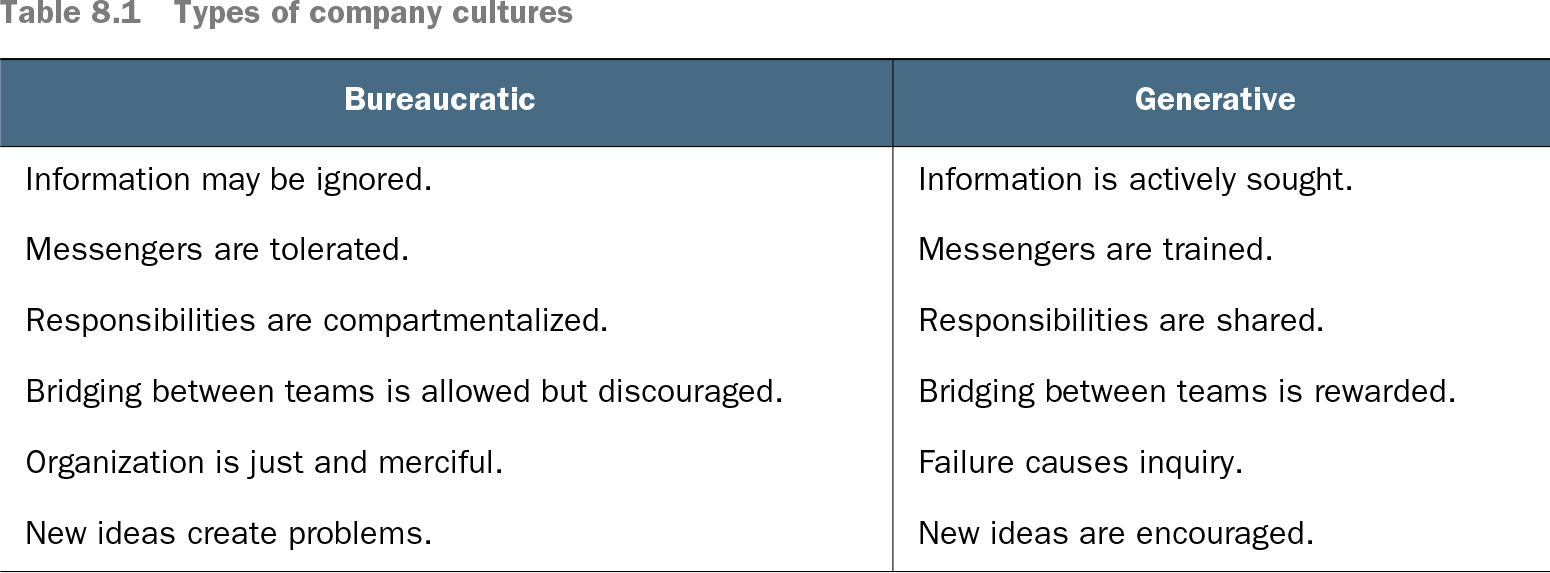
Table 8.1 Types of company cultures (view table figure)

Bureaucratic

Generative

Information may be ignored.

Information is actively sought.

Messengers are tolerated.

Messengers are trained.

Responsibilities are compartmentalized.

Responsibilities are shared.

Bridging between teams is allowed but discouraged.

Bridging between teams is rewarded.

Organization is just and merciful.

Failure causes inquiry.

New ideas create problems.

New ideas are encouraged.

Compare bureaucratic and generative cultures through information sharing, responsibility, team bridging, failure response, and attitudes toward new ideas. section 8.6

How Shipping Go: Develop, deliver, discuss, design, and go again covers it

How deep it goes
Explains the mindset, supporting practices, escalation pattern, and learning loop without specifying a complete implementation procedure.
Examples
Uses Toyota’s andon cord and contrasts organizations that investigate failure with those that search for someone to blame.
What you can do after
Apply it by exposing failures quickly, coordinating fixes, and converting incidents into process improvements.
How it connects
Connects automated testing, pair programming, code standardization, feedback cycles, generative culture, and bureaucratic culture.

This explainer was generated by Manning's knowledge graph from the text of Shipping Go: Develop, deliver, discuss, design, and go again. The section links point to the parts of the book it draws on.