Fan-out sends one completed operation into several downstream branches. In a typical API request, those branches begin after the critical database transaction commits and the response returns, so noncritical work does not extend the user's wait. section 8.4
Read a fan-out as the final phase of a request pipeline:
- Edge gating rejects invalid requests through bot detection, rate limits, and schema validation before database work. section 8.4
- The critical section performs conflict checks, writes, and idempotency protection inside an atomic database transaction. section 8.4
- Fan-out then sends email, webhooks, search updates, or other follow-up jobs to separate workers; branches may retry independently. section 8.4 section 9.5
Booking confirmation with downstream branches
After a booking commits and the API returns 201 Created, one branch sends email through SendGrid, another posts the BOOKING_CREATED payload to configured webhook subscribers, and another updates the search index. A failed webhook is retried rather than rolling back the booking; without durable handoff, a crash between COMMIT and the webhook call can silently lose the event. section 8.4 section 9.5
Figure 9.8 A request trace before and after the 200 OK response. The left side shows the synchronous work the user waits for: web server calls to the cache, database, and external APIs. The right side shows the asynchronous work that runs after the response is sent: a queue fans out jobs to workers that send email, fire webhooks, and update the search index.
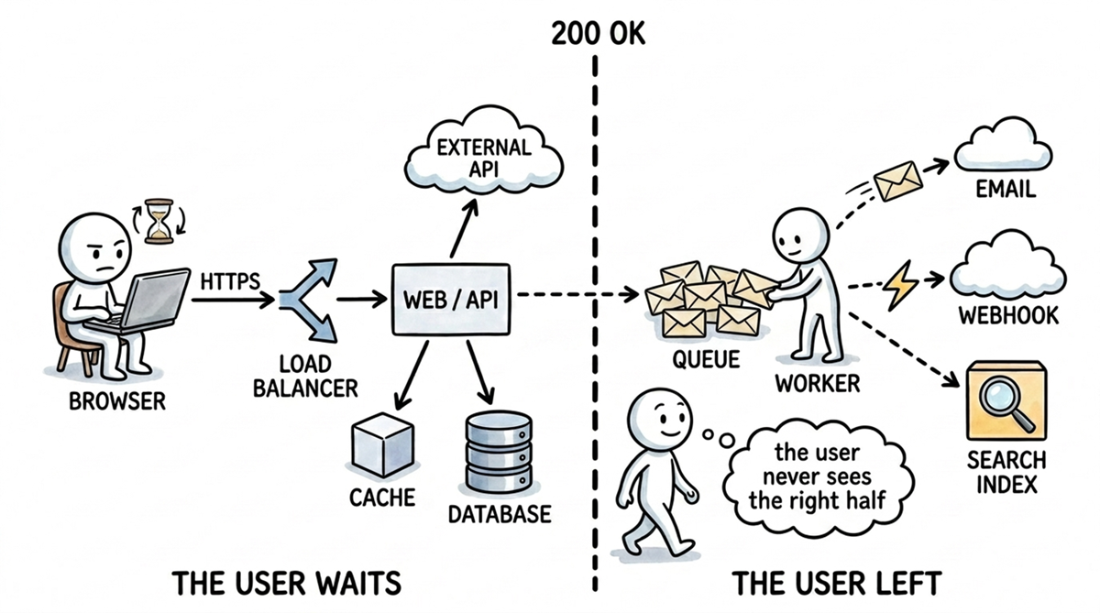
Use the trace to separate synchronous calls before the response from the queue and worker branches that fan out afterward. section 9.5


