Fast deployment minimizes the interval between tests finishing and an updated component serving production traffic. Automating deployment avoids the delay and errors of manual steps, helping the pipeline handle a continuous stream of changes. section 5.5.2
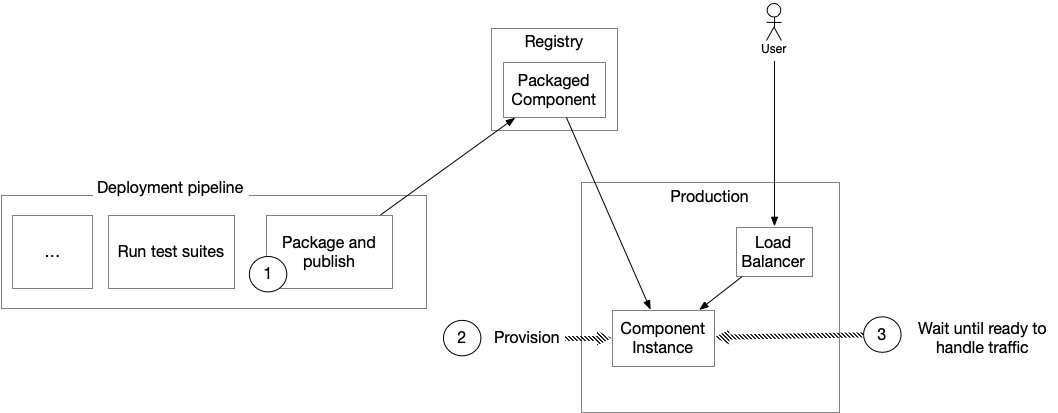
A deployment moves through three steps:
- Package the component for production and publish it to a registry. section 5.5.2
- Configure production to use the updated component, triggering its rollout and resource provisioning. section 5.5.2
- Wait for component instances to become ready to handle traffic. section 5.5.2
Aim for a process that takes only a few minutes. Rapid resource provisioning and component startup matter, especially when old and new versions run side by side during a progressive deployment. Containers can enable faster deployments. section 5.5.2
Figure 5.18 The deployment process consists of three steps: (1) the deployment pipeline publishes a component in a production ready package to a registry, (2) production is configured to use the updated component and (3) the component instances are started and become ready to handle production traffic
Shows the three-step deployment flow from publishing a package to production readiness. section 5.5.2
