Feature-based development creates a separate version-control branch for each change, allowing collaborators to work, test, review, and merge independently. In infrastructure work, branches can isolate firewall and license changes so one deployment does not obscure the cause of a failure. section 7.2 section 7.2.3
Apply the workflow with deliberate controls:
- Create a branch for each infrastructure change and test it independently before merging. section 7.2.3
- Use manual review to assess architecture, dependencies, and production impact. section 7.2.3 section 7.5
- Plan for environment and pipeline capacity: parallel branches can increase testing cost, creation time, and concurrency pressure. section 7.2.3
- Keep branches current and avoid long lifetimes, which can block other deployments and complicate merging. section 7.2.3
Firewall and license changes
Two teammates place their changes on separate branches and test them in distinct environments. The firewall rule can then be assessed independently from the license change before either reaches production. section 7.2 section 7.2.3
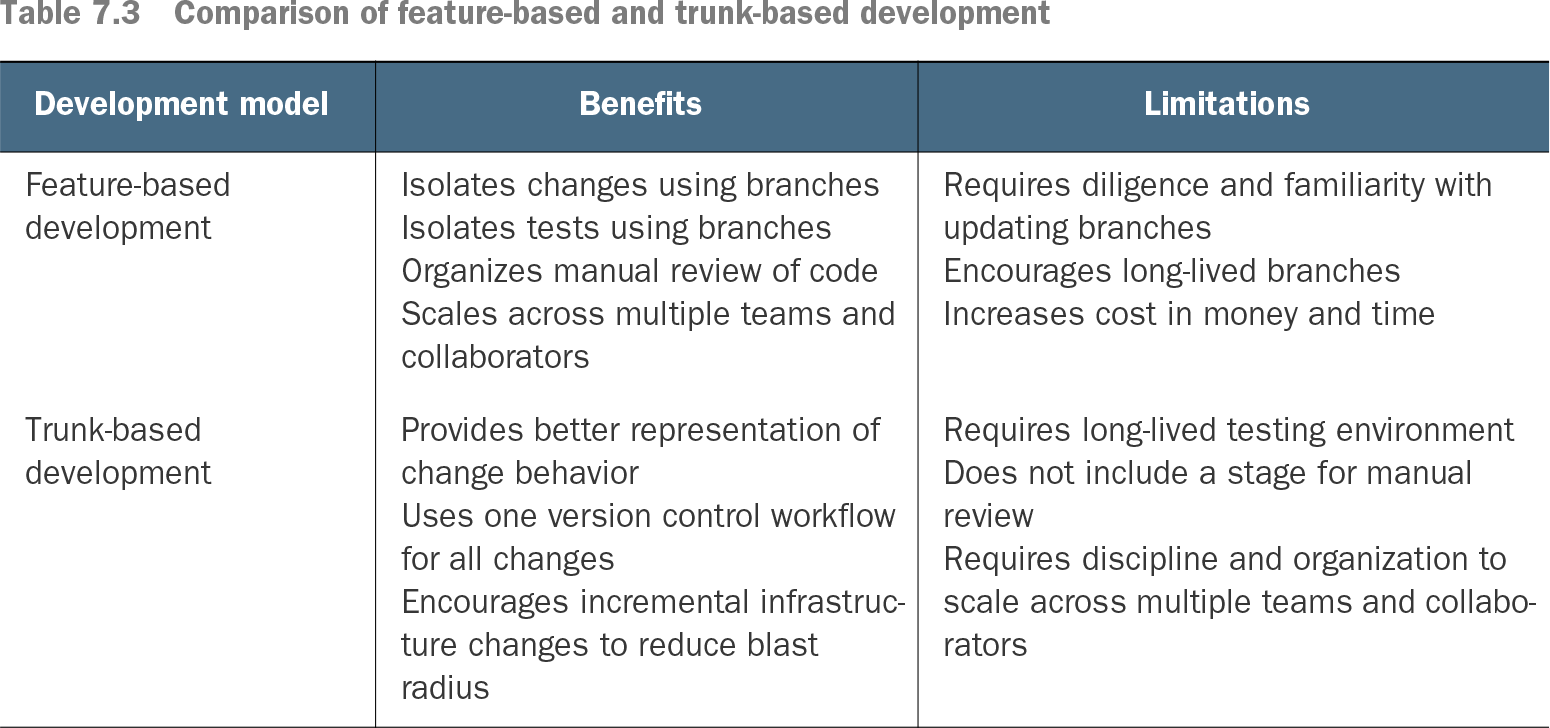
Table 7.3 Comparison of feature-based and trunk-based development (view table figure)
Compare feature-based development with trunk-based development across isolation, review, testing environments, cost, and collaboration constraints. section 7.2.3