liveBook · Manning

Fix-rate

As explained in Crack Any Codebase with AI

Fix-rate is the proportion of recorded software changes classified as fixes or bug repairs.

Fix-rate is the proportion of recorded software changes classified as fixes or bug repairs. Comparing it across development eras reveals whether maintenance is crowding out new work. section 6.3 section 6.4

Ghost’s platform era

During Ghost’s 2016–2018 platform bet, fix-rate climbed from 18% to 24% while build-rate fell. That pattern suggests the team was maintaining the bet more than expanding it. section 6.3 section 6.4

Figure 6.6 The four eras of a product's lifecycle as seen in its commit history: founder-led prototyping, maintaining a fading bet, a chaotic pivot, and mature, distributed development.
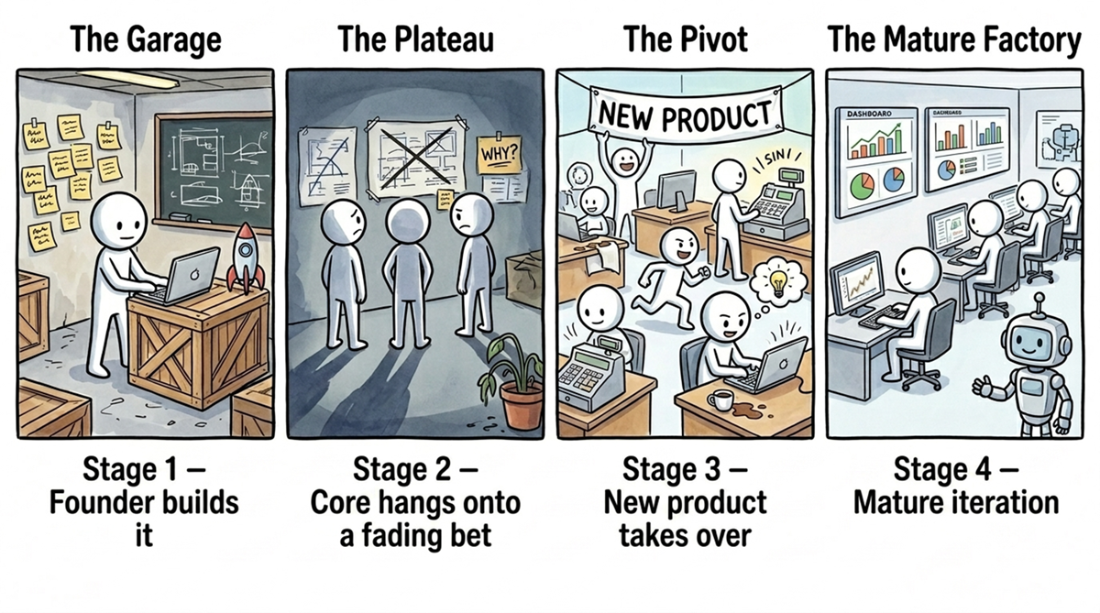
Use the lifecycle figure to compare fix-rate with broader shifts between prototyping, maintenance, pivots, and mature development. section 6.4

How Crack Any Codebase with AI covers it

How deep it goes
Defines a comparative metric and interprets an observed trend, but does not detail the classification procedure.
Examples
Uses Ghost’s platform era, where fix-rate rose from 18% to 24% as build-rate fell.
What it assumes
Assumes access to commit history and classified commit messages, while treating the metric’s interpretation through a concrete example.
What you can do after
Diagnoses maintenance pressure by comparing classified fixes across eras in a commit history.
How it connects
Connects fix-rate with commit history, build-rate, tech-debt ratio, lead time, and bus factor.

This explainer was generated by Manning's knowledge graph from the text of Crack Any Codebase with AI. The section links point to the parts of the book it draws on.