What if “I’m not creative” is not a fact but a belief that quietly narrows what you try? A fixed mindset treats talent and ability as set: people are either creative or not, smart or not. It can turn another person’s skill into envy, or into proof that they simply have what you lack. In programming, it may sound like “I will never be more than a shabby coder.” section 6.2.1
The useful contrast is a growth mindset: abilities can be cultivated through effort and practice. These are not permanent personality boxes; a person may expect improvement in one field while feeling fixed in another. The belief held about a particular field helps guide behavior there, so treating creativity as unlearnable can discourage the very exploration that develops it. section 6.2.1 section 6.2.4
A fixed mindset can show up in software work as habits that protect a current identity:
- Avoiding an unfamiliar language, project, or subject because being a beginner might expose ignorance. section 6.2.3
- Treating criticism as a verdict on personal worth rather than feedback that could improve a skill. section 6.2.1
- Denying mistakes or assigning blame when work goes wrong, rather than sharing responsibility. section 6.2.4
Leaving the familiar fishbowl
In open programming assignments, higher-performing students went beyond the material they had been taught. They explored unknown options, fumbled and failed, then continued toward more original designs. That exploration also coincided with more clean-code problems found by static analysis, a reminder that venturing outward can demand deliberate attention to quality rather than magical confidence. section 6.2.3
A practical response is to notice a fixed claim, then make a small experiment possible: try a new technique, pursue a neighboring interest, ask what criticism can teach, or enter a new project before necessity forces the move. Curiosity and perseverance support this shift, but it takes repeated effort rather than a few motivational pointers. section 6.8 section 6.3.2
Figure 6.3 Fixed and growth mindsets. Would you rather buy a padlock to protect (limiting) or get fertilizer to grow (freedom)?
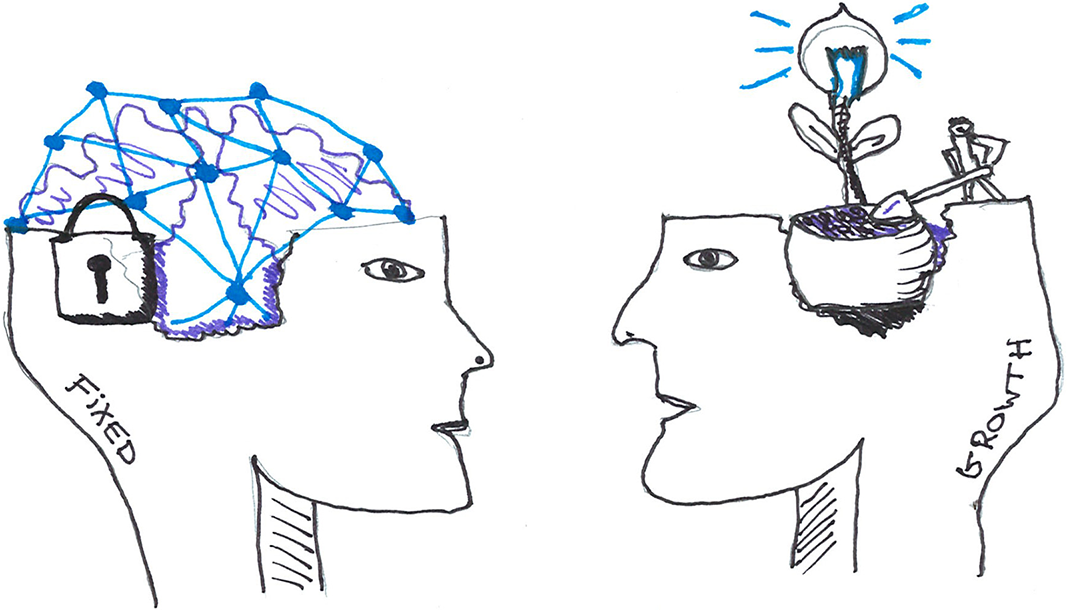
The padlock-and-fertilizer image makes the contrast memorable: protecting supposedly fixed traits limits options, while cultivating abilities invites growth. section 6.2.1
