Flow engineering deliberately hardcodes part of an AI workflow instead of leaving every step to autonomous planning. It trades some adaptability for greater speed and reliability, making it useful when planning mistakes are costly or workflows are well established. section 9.2.2 section 9.3.1
Use explicit flow engineering when:
- The workflow follows a known domain-specific pattern, such as an established coding process. section 9.2.2
- Long-horizon planning, unexpected errors, or unreliable tool calls make online planning difficult to recover. section 9.3.1
- Speed and predictable execution matter more than maximum agent adaptability. section 9.2.2 section 9.3.1
A fixed flow does not eliminate reasoning. It can assign reasoning to defined stages, combine decomposition with reflection, and use prompt chaining, parallelization, or routing where those patterns fit. The design should also identify actions that need confirmation, rollback mechanisms, or audit logs. section 9.2.2
A controlled finance workflow
An expense-analysis agent can follow a predefined sequence: flag transfers above a threshold, cross-check transaction history, and require multistep verification before an irreversible action. Human approval becomes an explicit workflow step rather than an optional response to uncertainty. section 9.2.2
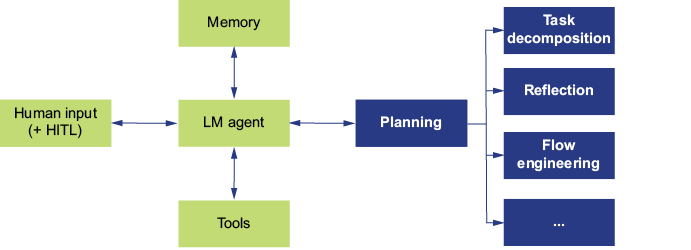
Compare planning methods before deciding which parts of an agent workflow should remain adaptive and which should become explicit. section 9.2.2
