Flow is a deeply absorbed, intrinsically rewarding state of engagement—also called an optimal experience. It is not simply being good at an activity: it combines excellence with enjoyment, so fully that the activity can feel worth doing for its own sake. section 7.2.1
A creative breakthrough may seem sudden: Archimedes’ bath and Poincaré’s bus ride are memorable images of insight arriving away from deliberate effort. Yet such stories invite curiosity rather than certainty. Poincaré described creation as conscious work, unconscious work, then further conscious work to develop what emerges. section 7.0
Flow has nine commonly associated qualities:
- A clear goal and immediate feedback guide the activity. section 7.2.1
- Challenge and skill are balanced, while action and awareness seem to merge. section 7.2.1
- Distractions and self-consciousness recede; failure feels less threatening and time may become confused. section 7.2.1
- The work becomes autotelic: internally driven, as when programming is rewarding for its own sake. section 7.2.1
For programming, flow needs realistic goals, skills suited to the available actions, and complete focus. A routine task that has already been solved many times can be boring; a task far beyond current skill can bring anxiety, frustration, or giving up. The useful target is a demanding but workable problem. section 7.2.1
Figure 7.3 High skill levels and high challenges lead to the mental state of flow. Easier challenges lead to less satisfaction, and lower skill levels can cause anxiety. The depicted mental states were brought together in this flow model by Mihaly Csikszentmihalyi.
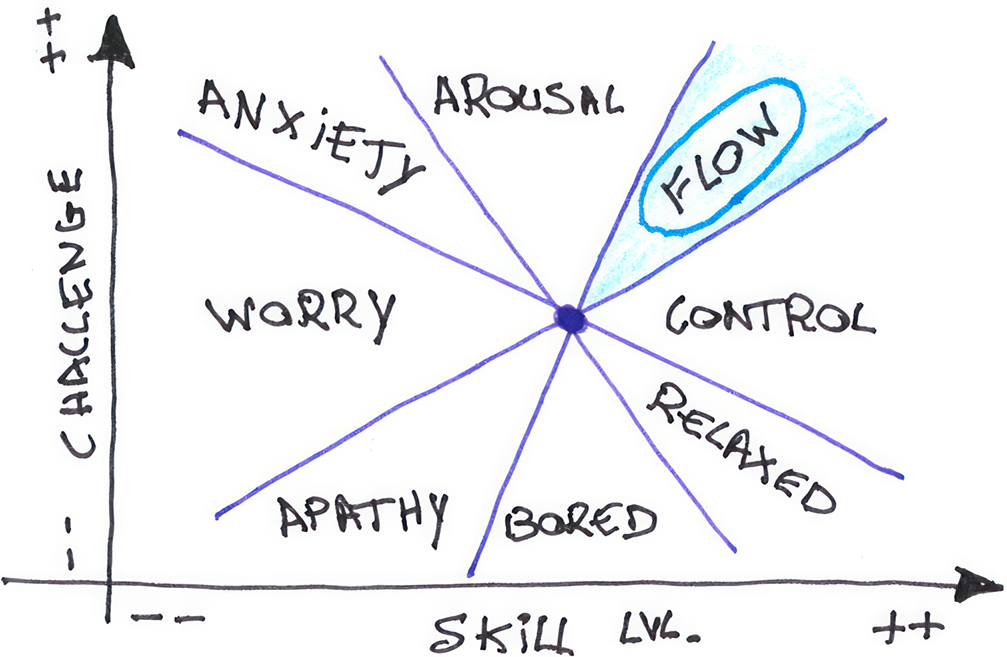
Use the flow model to compare challenge with skill: high levels of both point toward flow, while easier work offers less satisfaction and insufficient skill can produce anxiety. section 7.2.1
A small programming check-in
Before starting a task, ask: Is the goal clear? Will I get feedback soon? Is this difficult enough to require creativity but not so difficult that I will stall? Then remove a likely distraction and work on one focused slice. If boredom or anxiety appears, adjust the challenge or the support available. section 7.2.1
