liveBook · Manning

Four ds

As explained in Shipping Go: Develop, deliver, discuss, design, and go again

The four Ds are the develop, deliver, discuss, and design stages of an iterative product-development cycle.

The four Ds organize product development as a feedback loop: develop a customer-requested change, deliver it, discuss its value with customers, and design the next step. section 1.1

The cycle moves through four connected stages:

  • Develop features or changes that address what customers want. section 1.1
  • Deliver the manufactured product through an increasingly automated flow. section 1.1
  • Discuss the product or feature with customers and use their response as feedback. section 1.1
  • Design the next change, restarting the loop with better information. section 1.1

From commit to customer

Treat committed source code as raw material: analyze it, build it, and ship the result as a library to a device or server. Customer discussion then informs the next design. section 1.1
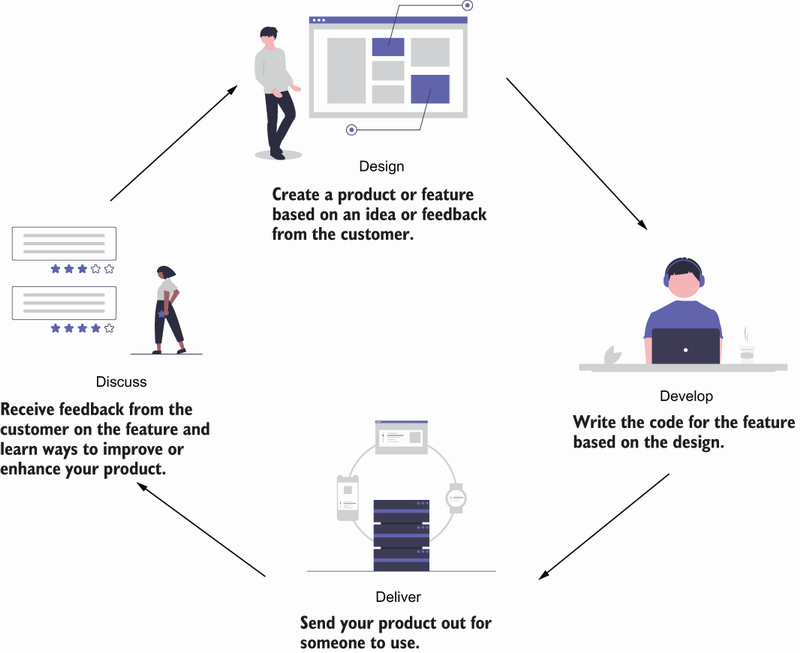
Figure 1.2 Develop, deliver, discuss, design loop

The loop diagram shows how development, delivery, discussion, and design return work to the next iteration. section 1.1

How Shipping Go: Develop, deliver, discuss, design, and go again covers it

How deep it goes
Defines four stages and relates them to automation and delivery pipelines, but stops short of detailed implementation guidance.
Examples
Uses committed source code, automated pipeline handoffs, and an assembly-line analogy to illustrate delivery.
What you can do after
Apply it to deliver requested changes, gather customer feedback, and redesign with less upfront investment.
How it connects
Connects iterative product development with customer feedback, value streams, automation, delivery pipelines, and lean manufacturing.

Related concepts

This explainer was generated by Manning's knowledge graph from the text of Shipping Go: Develop, deliver, discuss, design, and go again. The section links point to the parts of the book it draws on.