liveBook · Manning

Functional excellence

As explained in Architecture Modernization: Socio-technical alignment of software, strategy, and structure

Functional excellence is the ongoing work of maintaining existing artifacts, removing technical debt, and refactoring legacy to preserve platform quality.

Functional excellence is the ongoing allocation of capacity to maintenance, technical-debt reduction, and legacy refactoring. It preserves platform health by lowering complexity and the cost of change, rather than treating modernization as a one-off project. section 16.3.5

A practical operating model includes:

  • Reserve a deliberate share of team capacity; one organization established a 25% allocation for functional excellence. section 16.3.5
  • Create a technical-debt inventory, estimate items roughly, and set a target for annual repayment. section 16.3.5
  • Prioritize work by impact, team and artifact distribution, dependencies, and duplication; track progress through quarterly OKRs and check-ins. section 16.3.5

Balancing delivery and excellence

Focusing only on delivery eventually increases the cost of change, reducing delivery speed and creating tangible business impact. Balancing delivery with excellence keeps complexity and platform deterioration in check. section 16.3.5
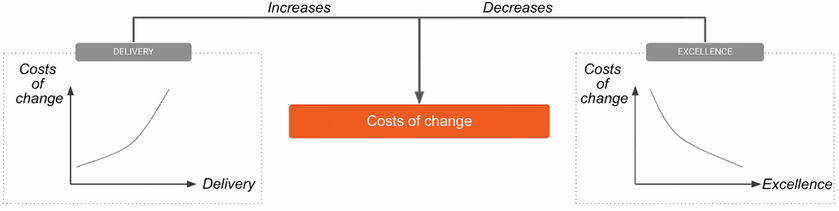
Figure 16.13 Maintaining a low cost of change by balancing delivery and excellence

Use the balancing model to discuss how delivery investment and functional excellence jointly maintain a low cost of change. section 16.3.5

How Architecture Modernization: Socio-technical alignment of software, strategy, and structure covers it

How deep it goes
Defines the rationale and outlines capacity allocation, inventory, prioritization, targets, and quarterly tracking without detailing refactoring techniques.
Examples
Uses a 25% capacity allocation, a technical-debt inventory, annual repayment targets, and quarterly OKR check-ins.
What you can do after
Apply it via a technical-debt inventory and OKR process that prioritizes repayment, tracks progress, and removes blockers.
How it connects
Connects technical debt, maintenance, refactoring, cost of change, OKRs, architectural principles, platform health, and team dependencies.

Related concepts

This explainer was generated by Manning's knowledge graph from the text of Architecture Modernization: Socio-technical alignment of software, strategy, and structure. The section links point to the parts of the book it draws on.