Architecture must preserve room for later changes without turning uncertain possibilities into expensive speculative systems. The central trade-off is between flexibility and present delivery risk. section 4.4
Assess a possible change by asking:
- How likely and consequential is it, and how difficult would reversal be? section 4.4
- Can a small seam, stable contract, ADR, compatibility rule, or test strategy preserve useful options? section 4.4
- What evidence signals rising pressure, such as volume growth, new consumers, cost, support friction, regulation, or workarounds? section 4.4
- When is the last responsible moment: late enough to retain flexibility, but early enough to avoid delivery, financial, operational, or strategic risk? section 4.4
Figure 4.2 Architectural decisions are most effective when made at the last responsible moment: late enough to preserve flexibility, but early enough to avoid delivery risk.
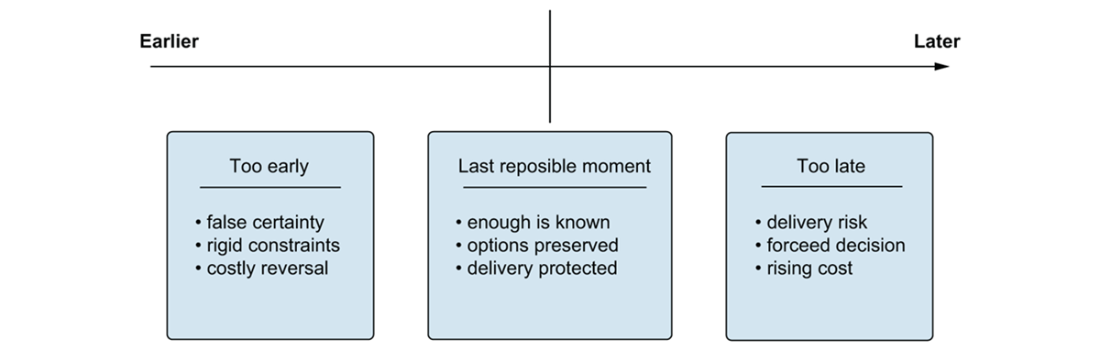
Use the decision-timing model to distinguish premature commitment from delay that has become risky. section 4.4
