liveBook · Manning

Gc_grace_seconds

As explained in ScyllaDB in Action

gc_grace_seconds is a ScyllaDB table setting that specifies how long a tombstone must remain before it may be removed by garbage collection.

gc_grace_seconds is a table-level ScyllaDB setting that specifies how long a tombstone must remain before compaction may remove it. Scylla defaults this period to 10 days. section 6.2.3

The delay gives tombstones time to reach all replicas. Removing one too early can allow a deleted value to reappear when a node still holds the old data; keeping it too long consumes storage. section 6.2.3 section 6.6

Use the setting with these operational considerations:

  • Choose a value that balances replica synchronization against unnecessary tombstone accumulation. section 6.2.3
  • Repair the cluster within the grace period so replicas synchronize tombstones before compaction can remove them. section 6.2.3 section 6.6
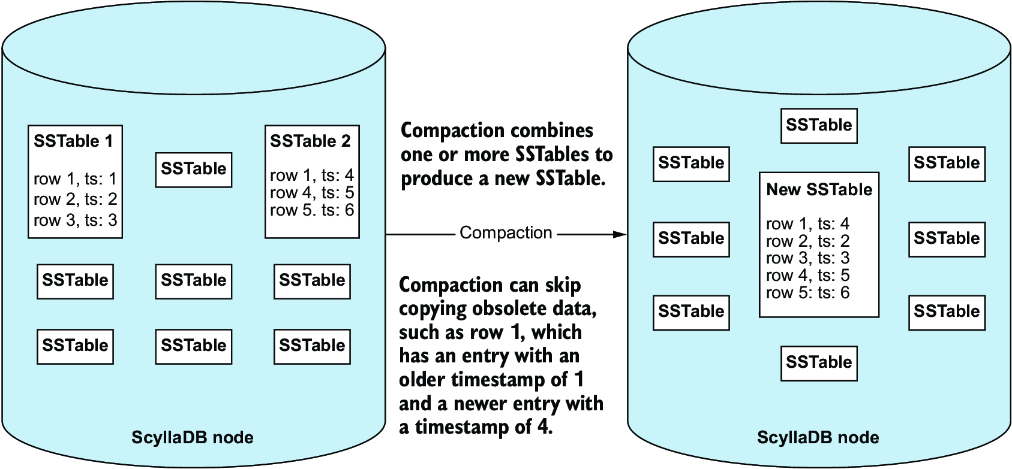
Figure 6.6 Compaction combines multiple SSTables into a newer SSTable, skipping obsolete rows and eligible-for-deletion tombstones.
figure

Compaction combines SSTables and skips tombstones that have become eligible for removal. section 6.2.3

How ScyllaDB in Action covers it

How deep it goes
Explains compaction, replica-consistency risk, storage trade-offs, and repair mitigation, but does not detail repair procedures.
Examples
Uses SSTable compaction, deleted rows, tombstones, and cluster repair as concrete operational examples.
What it assumes
Assumes familiarity with ScyllaDB tables and replicas while defining tombstones, SSTables, compaction, and repair.
What you can do after
Operate/configure tombstone retention while avoiding premature removal and unnecessary accumulation.
How it connects
Connects tombstones, compaction, replicas, consistency, data resurrection, and repair.

This explainer was generated by Manning's knowledge graph from the text of ScyllaDB in Action. The section links point to the parts of the book it draws on.