liveBook · Manning

General purpose ssd

As explained in Amazon Web Services in Action, Third Edition: An in-depth guide to AWS

General-purpose SSD storage is a storage configuration providing moderate baseline performance with the ability to burst.

General-purpose SSD storage provides moderate baseline performance with the ability to burst. Use it as the default for medium-load workloads with random access, including EC2 boot volumes and applications with low-to-medium I/O demand. section 8.1.3 section 10.6.1

Choose general-purpose SSD when:

  • Your workload performs small, random reads and writes rather than sustained sequential transfers. section 8.1.3
  • Moderate baseline performance is sufficient and occasional bursts are useful. section 10.6.1
  • You need a production database option without guaranteed high throughput; choose Provisioned IOPS SSD when throughput must be guaranteed. section 10.6.1

Performance depends on workload, I/O size, the provisioned volume, and the EC2 instance's available bandwidth. EBS charges for provisioned capacity even when the volume is not full, so sizing affects cost. section 8.1.3

Web application boot volume

Configure a general-purpose SSD volume as the boot disk for an EC2 web application with low-to-medium, randomly accessed I/O. Check that the instance can supply the required EBS bandwidth before increasing volume performance. section 8.1.3

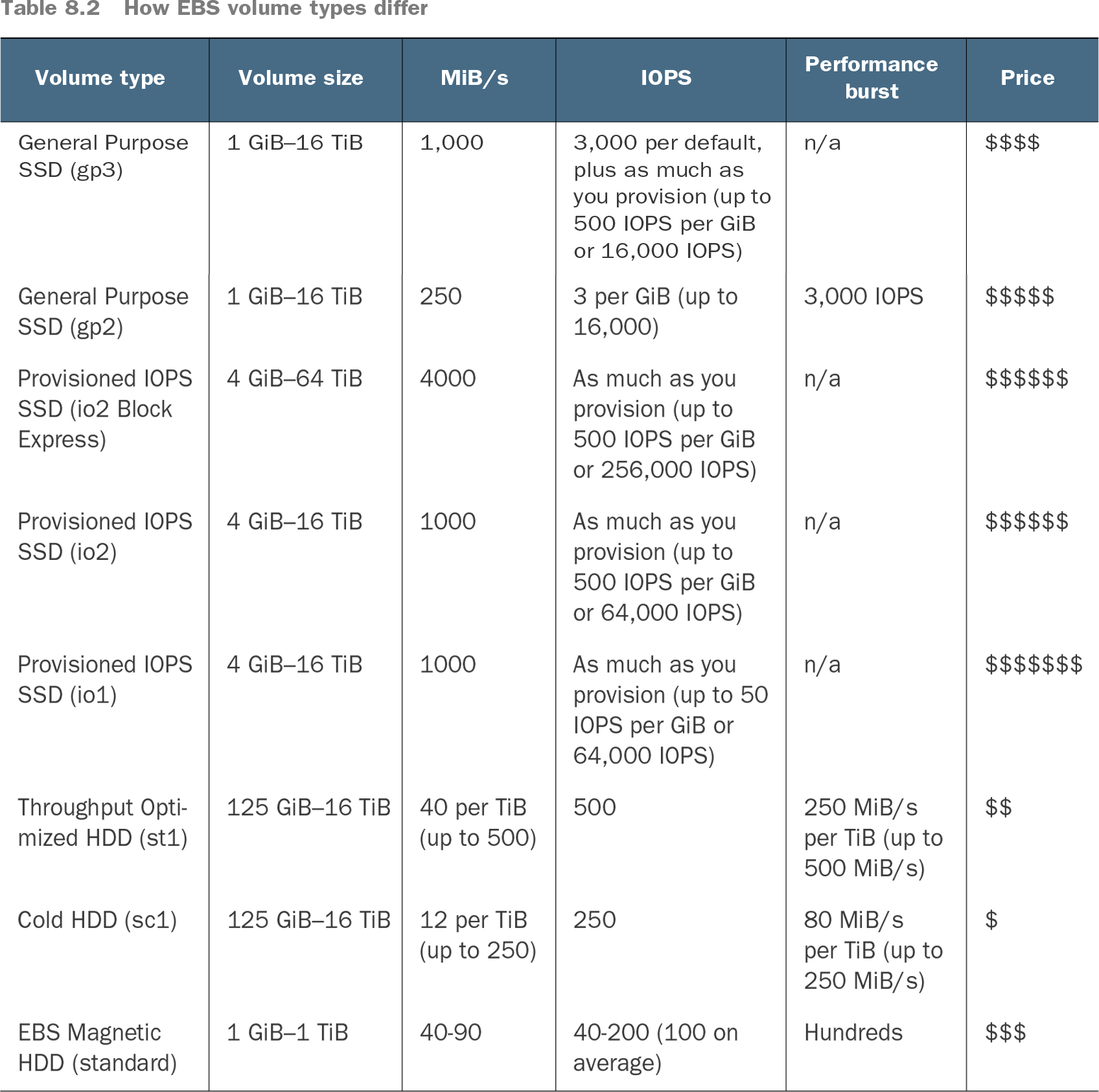
Table 8.2 How EBS volume types differ (view table figure)

Volume type

Volume size

MiB/s

IOPS

Performance burst

Price

General Purpose SSD (gp3)

1 GiB–16 TiB

1,000

3,000 per default, plus as much as you provision (up to 500 IOPS per GiB or 16,000 IOPS)

n/a

$$$$

General Purpose SSD (gp2)

1 GiB–16 TiB

250

3 per GiB (up to 16,000)

3,000 IOPS

$$$$$

Provisioned IOPS SSD (io2 Block Express)

4 GiB–64 TiB

4000

As much as you provision (up to 500 IOPS per GiB or 256,000 IOPS)

n/a

$$$$$$

Provisioned IOPS SSD (io2)

4 GiB–16 TiB

1000

As much as you provision (up to 500 IOPS per GiB or 64,000 IOPS)

n/a

$$$$$$

Provisioned IOPS SSD (io1)

4 GiB–16 TiB

1000

As much as you provision (up to 50 IOPS per GiB or 64,000 IOPS)

n/a

$$$$$$$

Throughput Optimized HDD (st1)

125 GiB–16 TiB

40 per TiB (up to 500)

500

250 MiB/s per TiB (up to 500 MiB/s)

$$

Cold HDD (sc1)

125 GiB–16 TiB

12 per TiB (up to 250)

250

80 MiB/s per TiB (up to 250 MiB/s)

$

EBS Magnetic HDD (standard)

1 GiB–1 TiB

40-90

40-200 (100 on average)

Hundreds

$$$

Compare general-purpose SSD with Provisioned IOPS SSD and HDD alternatives by size, throughput, IOPS, bursting, and relative price. section 8.1.3

How Amazon Web Services in Action, Third Edition: An in-depth guide to AWS covers it

How deep it goes
Explains workload matching, I/O effects, bandwidth balance, billing, and alternatives, but stops short of detailed benchmarking procedures.
Examples
Uses EC2 boot volumes, low-to-medium I/O applications, and RDS database storage as practical examples.
What it assumes
Assumes familiarity with EC2 or RDS and basic disk I/O, while introducing storage selection through workload examples.
What you can do after
Operate/configure EBS or RDS storage by matching general-purpose SSD to workload intensity and selecting alternatives when guarantees are required.
How it connects
Connects EBS and EC2 bandwidth with Provisioned IOPS SSD, Throughput Optimized HDD, Cold HDD, and RDS storage.

Related concepts

This explainer was generated by Manning's knowledge graph from the text of Amazon Web Services in Action, Third Edition: An in-depth guide to AWS. The section links point to the parts of the book it draws on.