Generative engineering uses generative AI to create new design options from goals, constraints, and parameters. It supports product and digital-asset design by exploring alternatives for functionality, performance, material, weight, or aesthetics, reducing manual design time and resource demands. section 4.1
Generative engineering is useful when design exploration must balance several criteria:
- Generate novel objects or structures rather than only modifying an existing design. section 4.1
- Optimize alternatives against constraints such as functionality, performance, material, weight, and aesthetics. section 4.1
- Use vision-model architectures such as VAEs, GANs, diffusion models, or vision transformers according to the scenario. section 4.1
A chair optimized across competing goals
A generative model produces unconventional chair designs while considering strength, aesthetics, material, and weight. The resulting alternatives help a design team explore options that conventional manual processes might not reach. section 4.1
Figure 4.3 A chair designed for strength, aesthetics, material, and weight
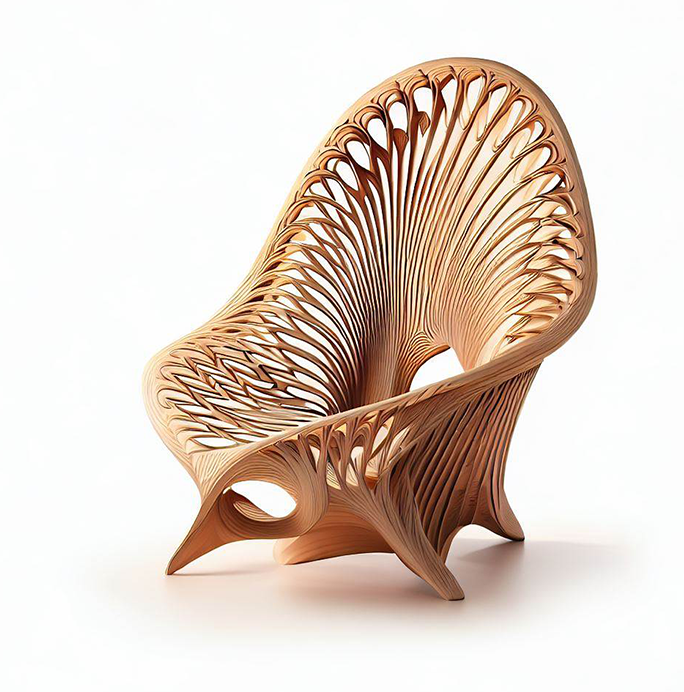
Use the chair illustration to compare how one generated artifact can express multiple optimization targets at once. section 4.1
