Good judgment weighs a situation’s benefits, risks, perspectives, and possible outcomes before choosing an informed course of action. It turns knowledge and experience into wise decisions. section 9.1
Sound decisions also need an ethical framework. Anchoring action to values and principles helps prevent expedient choices from causing unintended harm or being misinterpreted. section 9.1.3
Common ethical frameworks guide good judgment in different ways:
- Utilitarianism seeks the greatest happiness for the greatest number. section 9.1.3
- Deontology evaluates actions through moral rules or duties, regardless of consequences. section 9.1.3
- Virtue ethics emphasizes qualities such as courage, honesty, and compassion. section 9.1.3
- Care ethics emphasizes relationships, empathy, and responding to people’s needs. section 9.1.3
From idea to ethically grounded action
A practical workflow uses ChatGPT to generate preliminary ideas from a scenario, question, and requested number of answers; external sources then verify feasibility, and the content is revised within a chosen ethical framework. section 9.1.2 section 9.1.3
Figure 9.1 The DIKW pyramid enriched with the components of wisdom
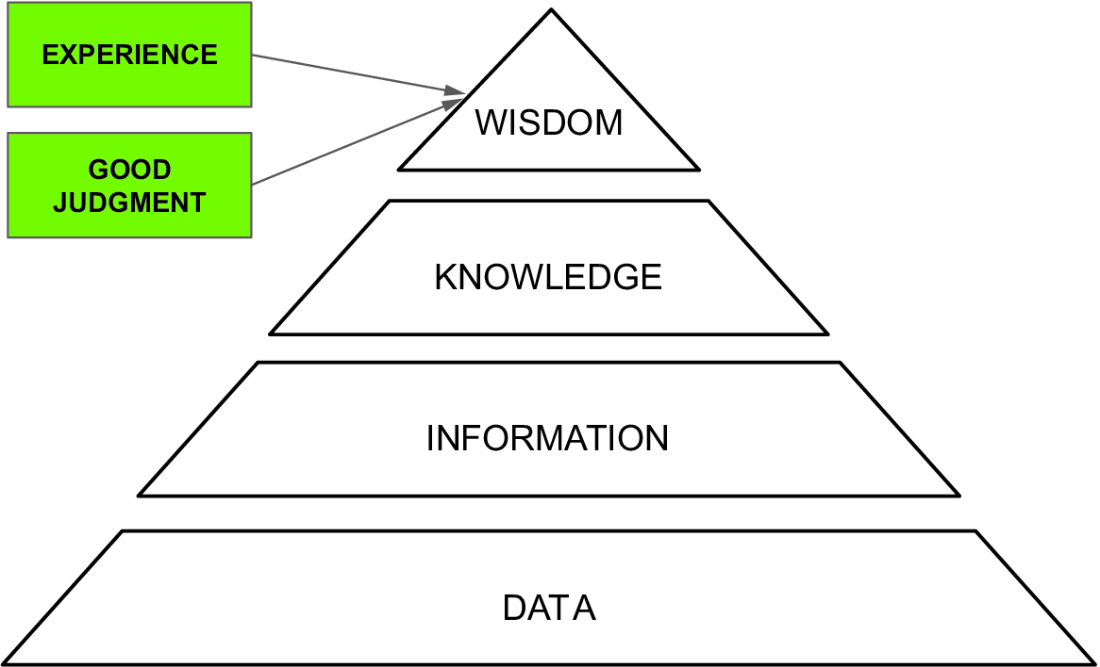
Use the enriched DIKW pyramid to see good judgment as one component of wisdom alongside knowledge synthesis and experience. section 9.1
