liveBook · Manning

GDCE zone

As explained in Google Anthos in Action

A GDCE zone is a physical rack or group of racks sharing space, power, cooling, and a contiguous network fabric as a single failure domain.

A GDCE zone is a rack or group of racks sharing space, power, cooling, and a contiguous network fabric as one failure domain. It differs from a GCE compute zone and is not returned by GCE zone listings. section 8.3.1

Use the zone boundary to reason about placement and resilience:

  • Treat each zone as a single failure domain. section 8.3.1
  • Deploy applications across multiple zones in the same region to improve high availability and limit the effect of zone failures. section 8.3.1
  • Associate physical machines with their designated region; machines can join clusters deployed only in that region. section 8.3.1

Rack-based cluster layout

A GDCE Kubernetes cluster uses a GCP-hosted control plane and worker nodes running on physical servers in GDCE racks. Spreading workloads across separate zones separates them across failure domains. section 8.3.1
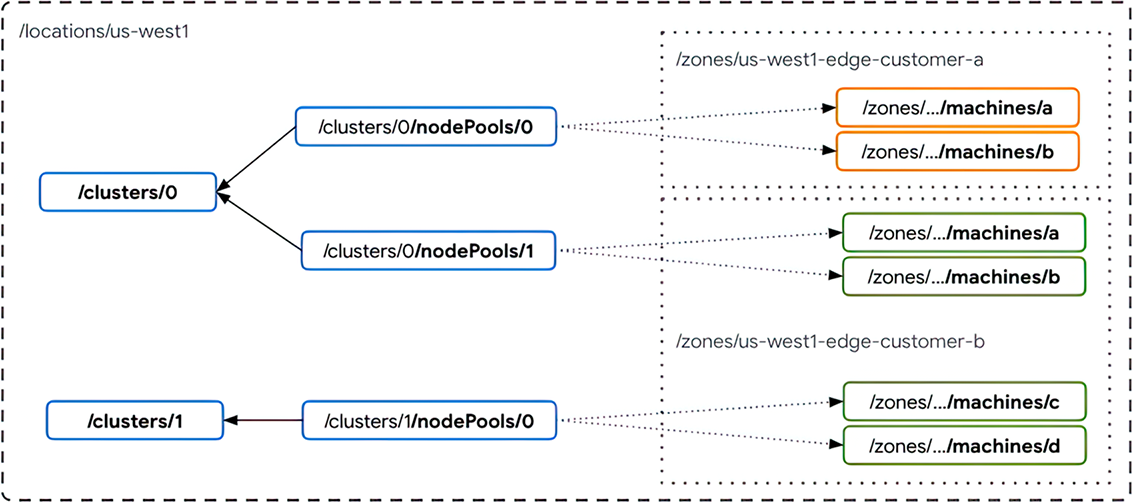
Figure 8.4 Google Distributed Cloud Edge container resource model
08-04

Use the resource-model figure to relate zones to machines, clusters, and node pools. section 8.3.1

How Google Anthos in Action covers it

How deep it goes
Explains shared infrastructure, regional constraints, and multi-zone availability, but does not detail provisioning commands or zone configuration.
Examples
Uses racks, groups of racks, physical machines, and multi-zone application placement as concrete examples.
What you can do after
Evaluate GDCE placement by distinguishing physical failure domains from GCE compute zones and selecting multiple zones for resilience.
How it connects
Connects zones with GDCE regions, machines, Kubernetes clusters, control planes, worker nodes, node pools, and high availability.

This explainer was generated by Manning's knowledge graph from the text of Google Anthos in Action. The section links point to the parts of the book it draws on.