Gradual migration replaces an all-at-once rollout with staged change: new functionality is introduced incrementally while older functionality is retired over time. In event-driven systems, producers and consumers using different event versions can coexist, reducing interruption during upgrades. section 6.2.5
Coordinate staged event changes through compatibility direction:
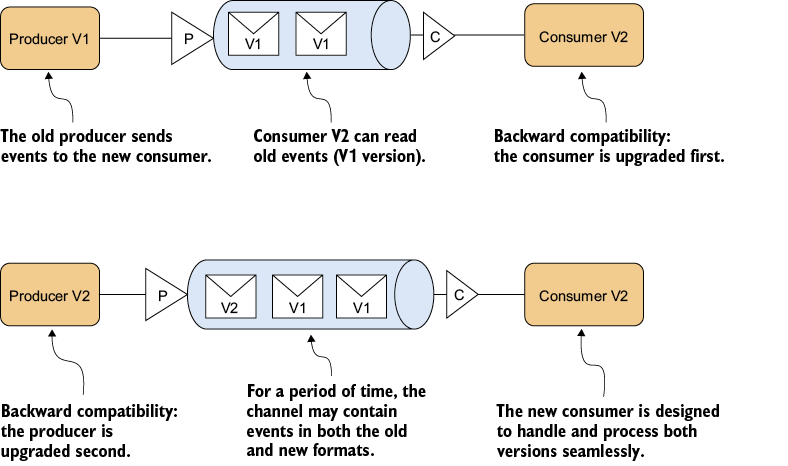
- Use backward compatibility when consumers upgrade first; the new consumer must read older events. section 6.2.5
- Use forward compatibility when producers upgrade first; older consumers must process the new events. section 6.2.5
- Validate schemas against the selected compatibility strategy to prevent deserialization failures, while accepting restrictions on permissible schema changes. section 6.2.5
Coexisting releases
Deploy new producers, consumers, and a channel alongside the old versions. Validate the new path, then retire the old deployment after it proves suitable. section 6.2.5
Figure 6.8 When using backward compatibility, consumers are upgraded first. The new version of the consumer can handle the old messages.
Compare consumer-first backward compatibility with producer-first forward compatibility before selecting an upgrade sequence. section 6.2.5
