A graph catalog is a GDS-managed collection of named, projected in-memory graphs. Create a graph once, then reuse it across multiple algorithm executions instead of rebuilding it each time. section 5.2
A practical graph-catalog workflow is:
- Project the required nodes and relationships into memory and assign the graph a name. section 5.2.1
- Run multiple algorithms against the named graph without creating a separate projection for each execution. section 5.2
- Use mutate mode to write algorithm results into the projected graph and pass them to another algorithm. section 5.2
Project a follower network
CALL gds.graph.project('follower-network', 'User', 'FOLLOWS') This creates a named in-memory graph containing User nodes and FOLLOWS relationships. Algorithms can access it by the name follower-network. section 5.2.1
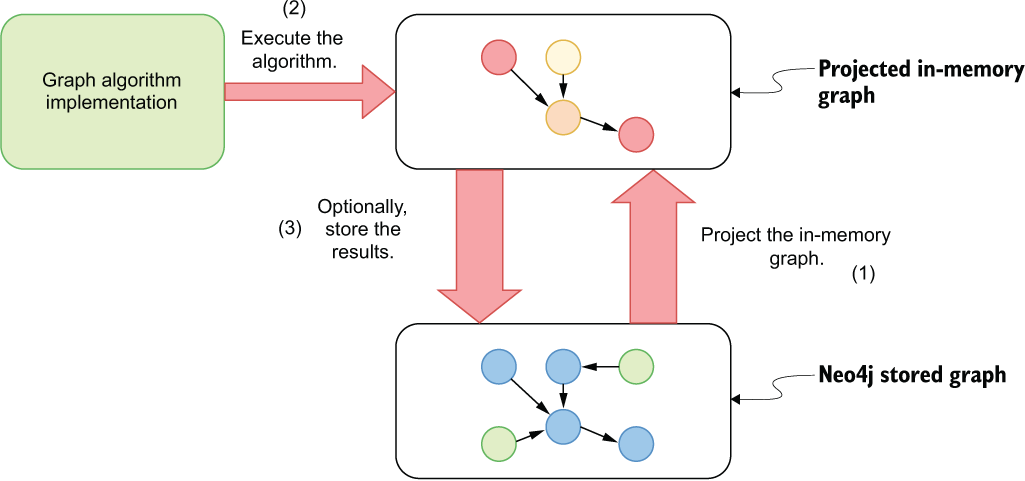
Use the workflow figure to connect projection, named-graph storage, and subsequent GDS algorithm execution. section 5.2
Listing 5.4 Native projection syntax to create a named graph in the graph catalog
CALL gds.graph.project(
   graphName,
   nodeProjection,
   relationshipProjection,
   optional configuration
)
Use the syntax listing to identify the graph name, node projection, relationship projection, and optional configuration. section 5.2.1
