When a movie landing page needs movie details, actors, and related films, a GraphQL query lets the consumer request that structure in one call. Unlike REST endpoints with fixed response shapes, the query specifies the fields to return, reducing under-fetching and over-fetching. section 7.1
A query must follow the GraphQL schema. It names an operation, selects fields such as id, name, and year, and can pass variables such as a required movieId. Resolvers then obtain the requested data; selecting a field absent from the schema causes the query to fail. section 7.1 section 7.2.3
A practical consumer query can:
- Fetch all movies with a MoviesQuery operation and request only id, name, and year. section 7.2.3
- Fetch one movie with a Movie operation and supply movieId as a variable. section 7.2.3
- Use Apollo Client to send the query to the GraphQL endpoint and handle returned data or errors. section 7.2.3
Querying a movie list
query MoviesQuery { movies { id name year } } requests a list with exactly those fields. A contract interaction can record the query, operation name, variables, endpoint, status, headers, and response shape; matchers can check types without requiring fixed values. section 7.3.3
Figure 7.2 A web consumer making a single query to a GraphQL endpoint to retrieve all the data they require
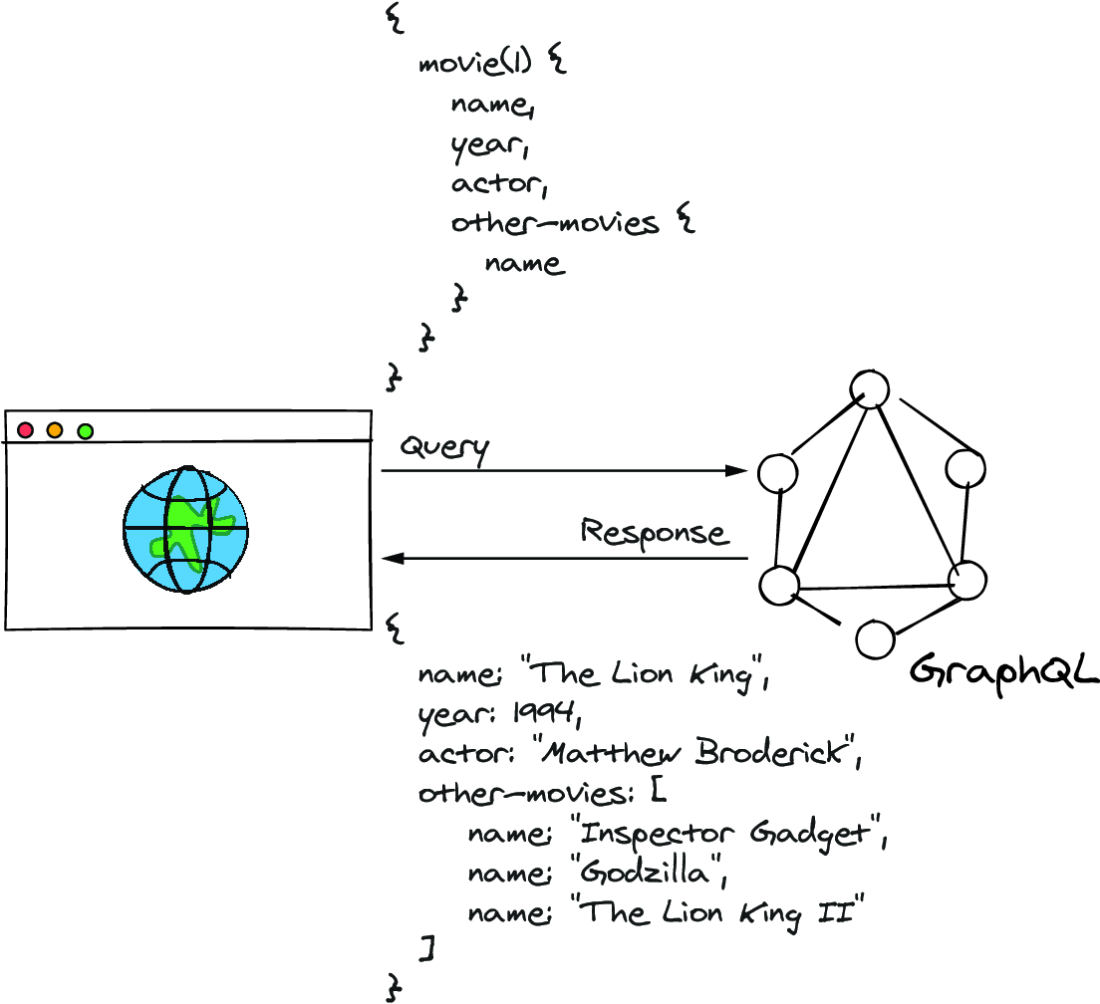
Compare the single GraphQL request with the multiple REST requests needed to assemble the same consumer data. section 7.1
const getMovies = async () => {
  const response = await client
    .query({
      query: gql`
        query MoviesQuery {      #1
          movies {               #1
            id                   #1
            name                 #1
            year                 #1
          }                      #1
        }                        #1
      `, #1
    })
    .then((result) => result.data)
    .catch((err) => err.response);

  return response;
};

const getMovieById = async (movieId) => {
  const response = await client
    .query({
      query: gql`
        query Movie($movieId: Int!) {      #2
          movie(movieId: $movieId) {       #2
            id                             #2
            name                           #2
            year                           #2
          }                                #2
        }                                  #2
      `, #2
variables: {
  movieId,
},
    })
    .then((result) => result.data)
    .catch((err) => err.response);

  return response;
};

module.exports = {
  getMovies,
  getMovieById,
};
Inspect client-side query definitions for list retrieval and variable-based single-movie retrieval. section 7.2.3

