A cognitive attack surface is the risk that AI-generated code weakens developers’ understanding of the software they maintain. Unlike a library dependency, AI-written code can look like familiar project code while hiding unfamiliar decisions. section 4.3.3
Ununderstood code is harder to debug, modify, and assess for failure modes. Its plausible micro-decisions can accumulate into cognitive debt and inconsistent patterns across features. section 4.3.3 section 4.6
A caching change
An AI-generated cache for an API endpoint contains a subtle race condition. When production slows weeks later, debugging takes hours because the developer must first understand code and decisions they did not make. section 4.3.3
Reduce the risk by making expectations explicit:
- Use specifications and standards to constrain AI-generated choices. section 4.6
- Review changes against standards, waste, and value; block merges for objective violations. section 4.6
Figure 4.6 Without defined standards, each AI-generated feature adopts different patterns, creating a maintenance burden and technical debt.
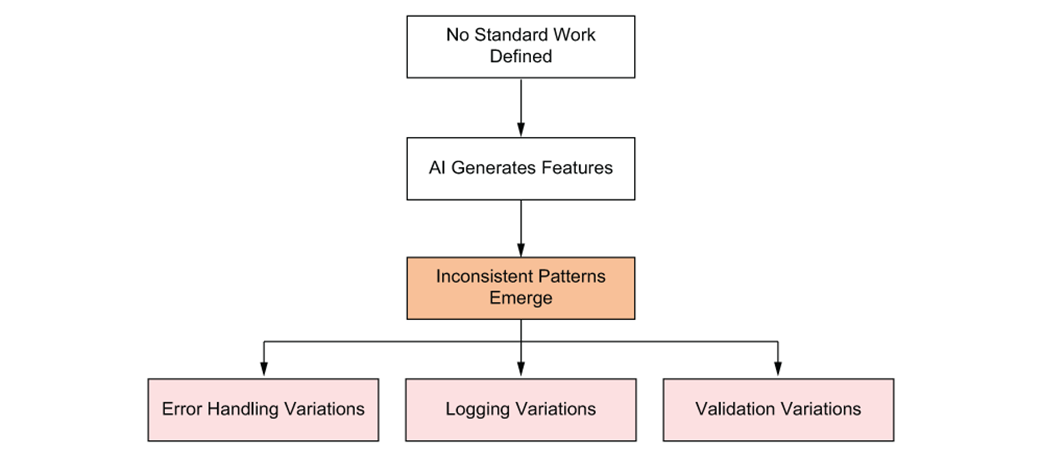
Shows how AI-generated features can adopt different patterns, increasing maintenance burden and technical debt. section 4.3.3
