A guardrail metric, also called a counter metric, is monitored alongside a primary metric to reveal possible costs of pursuing one goal too narrowly. It provides a check on performance that a single indicator might miss. section 7.3.1 section 7.4
Choose a guardrail while designing the primary metric:
- Ask stakeholders what could go wrong if the team focused only on the primary measure, including where quantity might displace quality. section 7.3.1
- Look for an existing metric that tracks an important process potentially in tension with the new goal. section 7.3.1
- Report the two together so a gain in the primary metric does not hide a deterioration elsewhere. section 7.3.1 section 7.4
Speed and quality
A support team tracking tickets resolved within 24 hours can also report customer satisfaction. Faster resolution is less reassuring if customers receive poorer support. Similarly, a software team can consider customer-reported bugs when tracking how quickly it ships features. section 7.3.1
Qualified leads and response time
Percentage of Leads Qualified for Sales can be reported monthly with Lead Response Time. The second measure helps reveal whether pursuing qualified leads comes at the expense of contacting other potential leads promptly. section 7.3.2
Figure 7.21 A simple visualization of the non-profit’s graduation rate and an employment counter metric
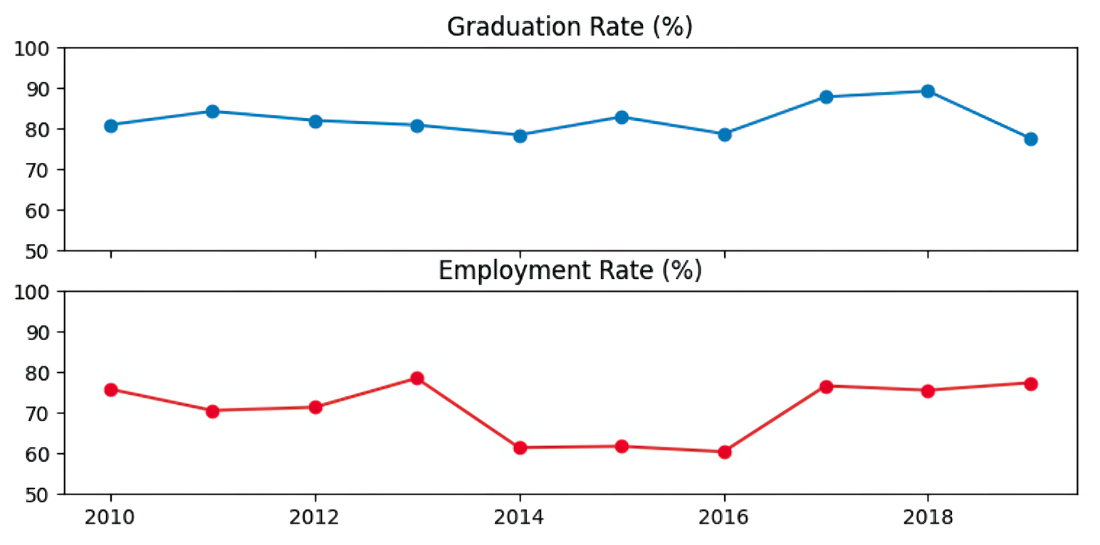
A paired visualization places a graduation rate beside an employment counter metric, making both outcomes available for review. section 7.3.1
