Helm is a package manager for Kubernetes applications. It groups, versions, packages, distributes, and installs the YAML resources needed to run an application, while templates allow environment-specific values without maintaining duplicate files. section 2.0 section 2.1.2
A Helm-based deployment workflow can:
- Render Kubernetes YAML from templates with substituted variables. section 2.1.2
- Distribute an application as a versioned Helm chart. section 2.1.2
- Create named releases, allowing multiple application instances in a cluster. section 2.2
- Render manifests without installing them by using helm template. section 2.2
Install the Conference application
With a Kubernetes cluster and the required command-line tools available, install the walking-skeleton Conference application from an OCI-hosted chart: helm install conference oci://docker.io/salaboy/conference-app --version v1.0.0. Helm creates the conference release and reports a deployed status; helm list displays the release. You can then use kubectl port-forward to access the frontend locally. section 2.2
Figure 2.3 Package Managers’ responsibilities: build, package, and distribute
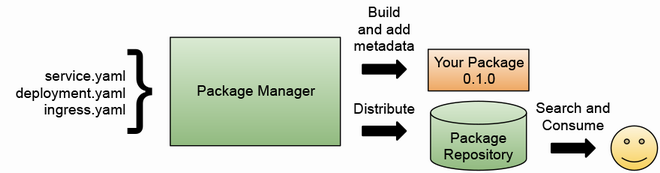
A workflow figure summarizes the package manager responsibilities of building, packaging, and distributing Kubernetes applications. section 2.1.2


