A graveyard entry turns a removed feature into a dated product record: what the team built, why it believed in it, why it died, and what the decision signals. section 6.5
Create one from a bulk-deletion event:
- Find a commit that removes five or more files from one folder; a whole-directory deletion often marks a retired feature. section 6.5
- Inspect the full diff with git show, because paths identify the removed area but deleted source reveals the actual behavior. section 6.5
- Write four short parts—what it was, what the team believed, why it died, and what it signals—then add a name, tagline, and epitaph. section 6.5
Live chat
What it was: a built-in storefront chat with a widget, messages table, and admin inbox. What they believed: shoppers wanted pre-purchase help. Why it died: nobody staffed it. What it signals: self-serve over hand-holding. Name: The Empty Inbox. Tagline: When live chat needed a human nobody hired. Epitaph: A front door with no one behind it. section 6.5
Figure 6.7 A project advertises what shipped, but its git history also records what was killed. These deletions (a plugin system that never found an audience, an AMP integration Google abandoned, a replaced subscribers v1) show which bets the team walked away from.
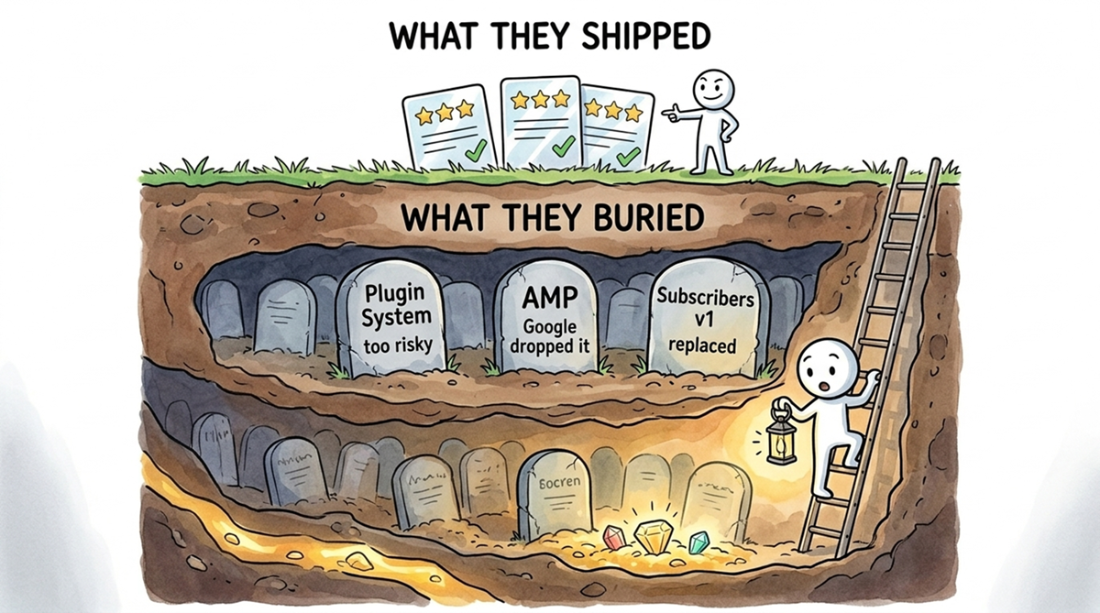
Use the project-history figure to compare shipped features with killed bets, including a plugin system, AMP integration, and subscribers v1. section 6.5
