nanoGPT is a compact, practical GPT-2 implementation for training language models and generating text. Its 19-file repository and 330-line model.py make the system small enough to read completely or inspect in a chat window, even when transformer code is unfamiliar. section 2.0
Use nanoGPT as a concrete codebase for learning and architectural investigation:
- Trace how a working implementation trains a language model instead of relying on abstract transformer explanations. section 2.0
- Compare its compact, hackable structure with larger abstractions such as HuggingFace Transformers. section 2.3.1
- Investigate surprising lines with constrained follow-up questions and produce a one-page system overview. section 2.0
A sharper investigation
A researcher studying attention-head specialization needs raw attention weights at every checkpoint. Rather than asking for nanoGPT’s general use cases, investigate the exact implementation path and compare it with the abstraction that frustrated her in HuggingFace Transformers. section 2.3.1
Figure 2.1 Paste code, get a generic wall of text. Follow up on the one line that surprises you. Constrain the output with numbers instead of adjectives. Write a learning note to prevent forgetting.
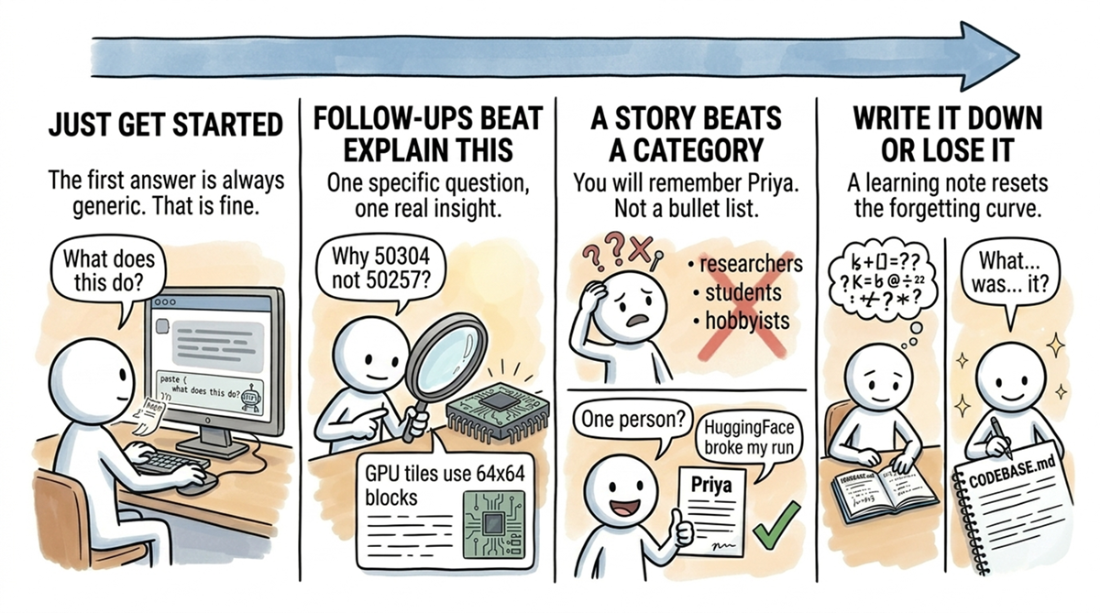
Follow a repeatable workflow: paste a small amount of code, question the line that surprises you, require concrete outputs, and write a learning note. section 2.0
