A strategic signal is a product or codebase characteristic that reveals priorities and future direction. Read what exists but is unadvertised, and what competitors offer but the code deliberately omits. section 5.5
Use two evidence-led questions:
- What is surprisingly present? Find hidden capabilities, anchor them in a path, table, model, or endpoint, and state the bet they reveal. section 5.5
- What is deliberately absent? Identify missing models, modules, or integrations, then weigh the focus gained against the risk if the omission is wrong. section 5.5
Cal.com
An Agent model, CalAiPhoneNumber model, and create-phone-call endpoint indicate an expansion from passive booking toward automated calling and follow-up. Missing video infrastructure, alongside provider configuration slots, signals integration rather than competition with video-conferencing services. section 5.5
Figure 5.8 The marketing pitch is "just a scheduling tool," but the code reveals three features the company doesn't advertise: an AI agent that phones customers to confirm meetings (the Agent model), routing logic that sends each booking to the right team member (the RoutingForm), and white-label theming that re-skins the app for each customer (the brandColor field). The real strategy is in the code, not the marketing copy.
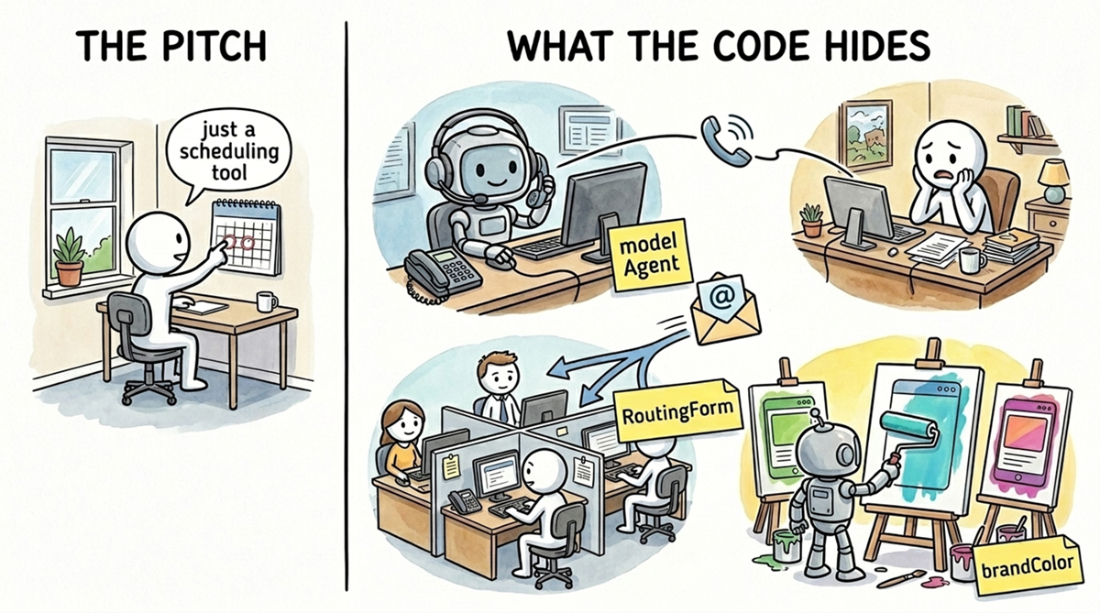
A figure connects three concealed capabilities—AI phone agents, routing logic, and white-label theming—to a broader product strategy. section 5.5
