liveBook · Manning

URI abstraction

As explained in Crack Any Codebase with AI

A URI abstraction represents resources through uniform addresses independent of whether they are local files, remote locations, or unsaved buffers.

A URI abstraction represents resources through uniform addresses rather than file paths. One addressing model can cover local files, remote SSH locations, and unsaved scratch buffers. section 3.1

One address, several resources

Treat opening a local file, a remote SSH file, or an unsaved buffer as the same kind of operation at the addressing layer. File System Abstraction builds on this uniform boundary. section 3.1

Figure 3.2 The ten core abstractions in VS Code, distilled from 10,000 files. The arrows show a recommended learning path, starting with foundational code like Resource Cleanup and ending with visible UI like the Workbench Layout.
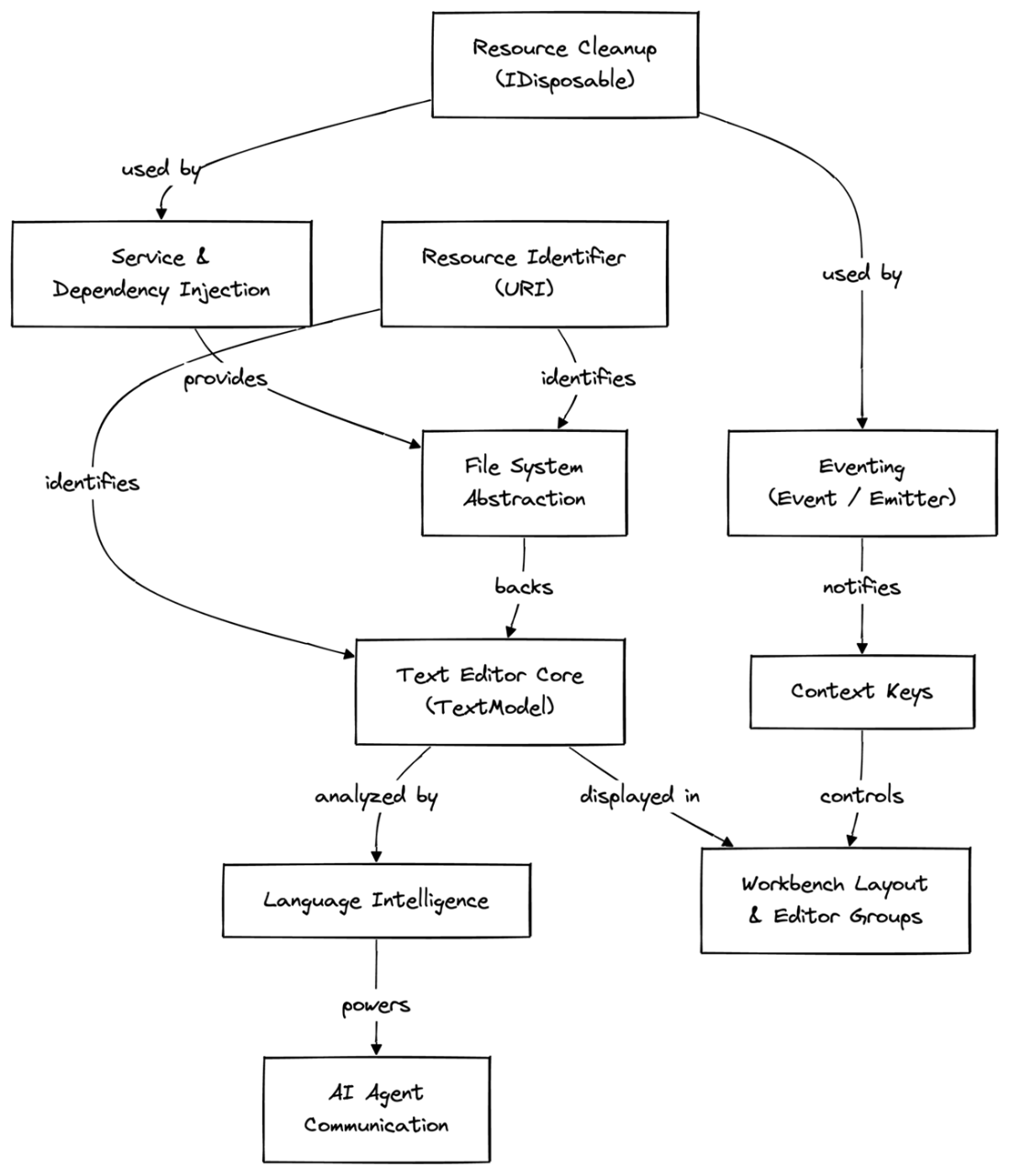
Locate URI abstraction among the ten architectural concepts and follow its dependency relationship with File System Abstraction and Text Editor Core. section 3.1

How Crack Any Codebase with AI covers it

How deep it goes
Defines uniform resource addressing and stops short of implementation details.
Examples
Uses local files, remote SSH folders, and unsaved scratch buffers as contrasting resource types.
What you can do after
Apply it to reason about resource-opening code without assuming every resource is a local file.
How it connects
Connects to File System Abstraction and Text Editor Core through the architecture's dependency path.

This explainer was generated by Manning's knowledge graph from the text of Crack Any Codebase with AI. The section links point to the parts of the book it draws on.