liveBook · Manning

ICMP flood

As explained in Secure APIs

An ICMP flood is a denial-of-service technique that sends large numbers of ICMP packets to consume a server's resources.

An ICMP flood, also called a ping or echo flood, is a denial-of-service technique that overwhelms a server with an unlimited stream of ping requests until legitimate users cannot receive responses. section 9.3

It is a volumetric attack against the infrastructure supporting an API, unlike application-layer attacks that exploit weaknesses such as unbounded data retrieval. Distributed variants use many origins to overwhelm services. section 9.3

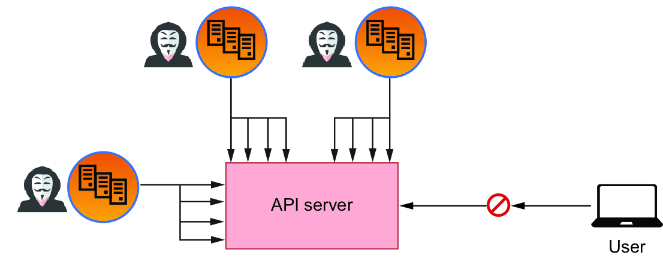
Figure 9.14 A common DoS attack is ping flood. The goal of this attack is to overwhelm the server with an unlimited number of ping requests until it can no longer respond to requests from legitimate users.
figure

The figure illustrates the failure mode: continuous ping requests consume server capacity until legitimate requests can no longer receive responses. section 9.3

How Secure APIs covers it

How deep it goes
Defines the attack, distinguishes volumetric and application-layer denial of service, and illustrates its server-impact goal.
Examples
Uses unlimited ping requests overwhelming a server until it stops responding to legitimate users.
What it assumes
Assumes only a basic understanding of network communication and distinguishes infrastructure layers from APIs.
What you can do after
Evaluate whether an outage reflects infrastructure-level volumetric flooding rather than an application-layer request vulnerability.
How it connects
Connects ICMP flooding with ping floods, echo floods, volumetric DoS, DDoS, and OSI network layers.

This explainer was generated by Manning's knowledge graph from the text of Secure APIs. The section links point to the parts of the book it draws on.