An ID token is a signed token from an identity provider that carries claims about an authenticated human, such as name, email, birth date, or identifier. It identifies the user; it does not prove permission to call an API. Use an access token to authorize operations and resource access. section 7.2.1
Figure 7.14 OIDC allows applications to use OPs to manage their user identities securely. In this case, the application redirects the user to the OIDC server to log in and give consent, and it obtains an ID token and an access token in return.
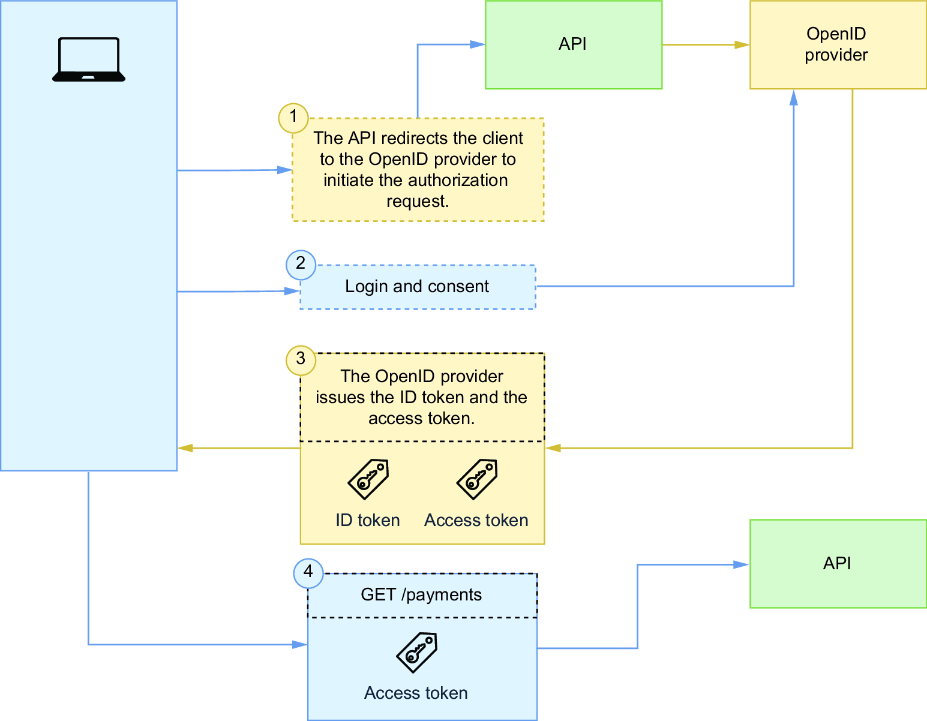
OIDC redirects the user to an identity provider for authentication and consent, then returns an ID token and optionally an access token. section 7.6
A typical OpenID Connect flow works as follows:
- Redirect the user to the identity provider with a registered client ID and the openid scope. section 7.6
- After login and consent, receive the ID token and, when requested, an access token. section 7.6
- Use the ID token to establish user identity and the access token to authorize resource-server requests. section 7.2.1
Signing in with an external identity
A website can let someone sign in with Gmail or GitHub. The website, registered as the relying party, receives claims about the authenticated user; an access token, if issued, is used for API access. section 7.6


